The 2026 search for the best Mono Pe Toothpaste Tube suppliers begins with a practical question: can the tube perform well after production, transport, use, and recycling?
Smithers’ The Future of Global Flexible Packaging to 2028 identifies mono-material structures as an important packaging development. Its analysis highlights recycling compatibility, downgauging, barrier performance, and manufacturing efficiency. These factors matter when toothpaste tubes face pressure, heat, moisture, and repeated handling.
The packaging is small. The engineering is not.
Market reports from Grand View Research and Euromonitor International also show continued demand for convenient, sustainable personal-care packaging. However, sustainability claims require evidence. A mono-PE tube is not automatically circular. Its shoulder, cap, ink, adhesive, and barrier layer must support the intended recycling pathway.
Ellen MacArthur, a leading circular-economy expert, states: “A circular economy is based on designing out waste and pollution, keeping products and materials in use, and regenerating natural systems.” This principle gives buyers a useful evaluation framework.
Reliable suppliers should provide resin specifications, recyclability testing, seal-strength results, oxygen and moisture barrier data, and production references. Factory audits remain valuable. So do physical samples.
A glossy sample proves little.
This guide compares worldwide Mono Pe Toothpaste Tube suppliers through a buyer’s lens. It considers technical experience, quality systems, customization, minimum order quantities, delivery reliability, and documented environmental claims. Some suppliers may offer excellent material innovation but weaker communication. Others may provide stable production but limited design flexibility. That trade-off deserves attention.
The strongest choice is not always the cheapest quotation. It is the supplier that can prove performance, disclose limitations, and improve the tube without hiding its imperfections.

Mono PE toothpaste tubes are flexible packs made mainly from polyethylene, or PE. Their tube body, shoulder, and often the cap use compatible PE grades. This design reduces the mix of plastic types found in traditional laminated tubes. The term sounds simple, but it is not perfectly precise. Inks, adhesives, colorants, and small functional layers may still need careful review.
During production, PE pellets are heated and shaped into a tube. The material must remain soft enough for easy squeezing, yet strong enough to resist cracks around the shoulder and seal. Good tubes recover their shape after use. They also protect toothpaste from moisture loss, air exposure, and contamination. However, a mono PE structure may provide less barrier performance than a multilayer design. Formula compatibility testing remains essential.
Recycling potential is one reason suppliers develop these tubes. A structure with fewer polymer types can be easier for recycling systems to identify and process. That does not guarantee recycling everywhere. Local collection equipment, tube size, closures, pigments, and printed layers all affect the result. Supplier evaluation should include resin specifications, wall thickness, seal strength, migration testing, and clear recycling evidence. A practical trial is valuable. Laboratory data can miss real squeezing, transport, and storage conditions.
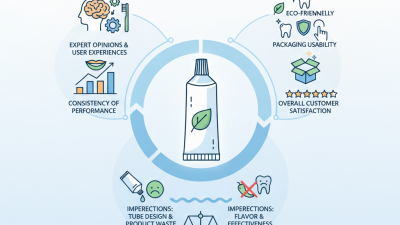
Reliable global suppliers should be judged by evidence, not attractive catalog photos. In my supplier reviews, I check resin specifications, tube weight, seal strength, and dimensional consistency. A mono PE structure can support recycling goals, but performance still depends on barrier design and processing control. Ask for migration test results, batch records, and current quality certificates. Request samples from different production runs. One sample is not enough.
Tips: Confirm the supplier’s factory location, monthly capacity, minimum order quantity, and typical lead time. Test tubes with your actual toothpaste formula, filling speed, crimping settings, and transport conditions. Check whether the shoulder, cap, and decoration match the recycling design. Written answers matter. Vague promises create expensive delays.
Strong suppliers explain their limitations clearly. They should provide technical drawings, inspection standards, complaint procedures, and corrective-action reports. Independent audits can reveal storage problems, weak traceability, or inconsistent hygiene controls. I would also review export experience across your target regions, because documentation errors can delay delivery. Price deserves attention, but unusually low pricing may hide thinner walls, unstable supply, or limited testing. I have seen specifications change after approval, so every agreed detail should appear in the purchase contract. Some assumptions remain difficult to verify remotely. A controlled pilot order is wiser than a rushed large shipment.
Europe remains a leading region for mono PE toothpaste tube manufacturing. Northern and Western European converters focus on recyclable structures, precise shoulder molding, and low-material designs. Their facilities often use advanced extrusion lines, digital inspection cameras, and controlled sealing temperatures. Regulatory pressure also encourages clear material declarations and responsible ink selection.
China offers strong production scale, mature tooling, and broad customization options. Many manufacturers can develop tubes with narrow wall thicknesses, complex shapes, and high-speed filling compatibility. India is gaining attention for cost-efficient production and flexible order support. Southeast Asia also provides competitive capacity, especially for export-oriented packaging projects. Quality may vary between factories.
North America supports reliable regional supply, shorter delivery routes, and closer technical communication for local buyers. Some plants specialize in premium decoration, while others focus on efficient high-volume runs. During supplier evaluations, I would inspect resin traceability, seal strength, layer composition, and batch records. A factory tour matters. Samples can look excellent while production controls remain weak. I have also found that “mono PE” claims need careful review, because barrier coatings, caps, adhesives, or printing layers may affect recyclability. Cost is important, but unstable sealing creates more waste than a higher initial quotation. Suppliers should provide practical test data, not only polished brochures.
Choosing the best mono PE toothpaste tube supplier in 2026 requires more than comparing prices. In practical sourcing work, I inspect tube samples, production records, and sealing performance. Check resin traceability, wall-thickness consistency, print adhesion, and cap torque. A reliable supplier should provide test reports for leakage, drop resistance, compression, and material migration. Small defects matter. A weak shoulder weld can cause a filled tube to fail during transport.
Compliance must be documented, not promised. Request current certificates, technical data sheets, batch records, and declarations for the target market. Confirm whether inks, additives, and adhesives meet applicable packaging requirements. Ask how the supplier supports recycling claims, because “mono-material” does not automatically guarantee local recyclability. Factory audits also reveal hygiene controls, worker training, calibration practices, and corrective-action records. I would not accept perfect paperwork without seeing production evidence.
Tips: Ask for samples from three separate batches. Compare color, dimensions, seal strength, and dispensing behavior. Review the supplier’s monthly capacity, minimum order quantity, lead time, and backup equipment. A factory may quote impressive output but lack enough extrusion lines during peak periods. Request a pilot order before full production. It costs more time, but it exposes problems early. Even experienced buyers can overlook cap compatibility or artwork tolerances, so keep a written approval checklist and challenge your own assumptions.
| Evaluation Category | Measurable Dimension | Recommended Qualification Benchmark | Evidence to Request and Verify | Suggested Weight |
|---|---|---|---|---|
| Material Structure | Mono-material polyethylene design | Tube body, shoulder, and compatible closure should use polyethylene-based materials wherever the product specification permits. Minimize non-PE layers, metal springs, and incompatible components. | Material specification, layer construction drawing, resin declarations, component bill of materials, and an independent material identification test. | 12% |
| Recyclability | Design-for-recycling compatibility | Use compatible PE components, easily separable or compatible decoration, and avoid materials that may disrupt the target recycling stream. Final recyclability depends on local collection and sorting systems. | Recyclability assessment, packaging-design guidelines used, component compatibility statement, and destination-market recycling requirements. | 10% |
| Barrier Performance | Oxygen, moisture, and aroma protection | Define acceptance limits according to the toothpaste formula. Barrier requirements should be validated for water activity, flavor retention, oxidation sensitivity, and shelf-life duration rather than assumed from the word “mono.” | Oxygen transmission rate, water-vapor transmission rate, aroma-retention data, compatibility study, and accelerated aging results. | 10% |
| Dimensional Control | Tube size and wall-thickness consistency | Supplier should control diameter, length, shoulder geometry, orifice size, wall thickness, fill volume, and ovality within agreed drawing tolerances. | Approved technical drawing, inspection plan, capability study, incoming inspection records, and dimensional inspection reports. | 8% |
| Dispensing Performance | Dose consistency and squeeze recovery | Establish a target dose range, opening force, squeeze force, residual product limit, and recovery requirement that match the toothpaste viscosity and consumer-use conditions. | Dispensing test protocol, force-displacement results, dose-repeatability data, leakage test, and consumer-use simulation. | 8% |
| Seal Integrity | Leakage, burst, and seal strength | Finished tubes should pass agreed leak and seal-strength limits after filling, capping, transport simulation, and temperature-conditioning tests. | Seal-strength records, vacuum or pressure leak-test results, burst-test data, transport simulation report, and retained samples. | 10% |
| Quality Management | Production and process control | A documented quality-management system should cover incoming materials, extrusion or molding, printing, assembly, final inspection, nonconformance handling, and corrective actions. ISO 9001 certification is a useful baseline but does not replace product audits. | Valid ISO 9001 certificate where applicable, process flow chart, control plan, calibration records, corrective-action examples, and recent audit report. | 10% |
| Regulatory Compliance | Market-specific packaging compliance | For food-contact applications, evaluate applicable requirements such as EU Framework Regulation (EC) No. 1935/2004, EU Plastics Regulation (EU) No. 10/2011, or relevant U.S. FDA food-contact provisions. For pharmaceutical packaging, assess applicable GMP and packaging-system requirements. | Declarations of compliance, composition and additive information, migration or extractables data, supplier change-control policy, and compliance statement for each destination market. | 12% |
| Chemical Safety | Ink, adhesive, pigment, and additive control | Printed surfaces, inks, adhesives, pigments, and processing aids should be selected for the intended product-contact and storage conditions. The supplier should control substances of concern and prevent unintended transfer. | Safety data sheets, restricted-substance declaration, ink and adhesive technical data, set-off assessment, migration testing, and batch traceability. | 6% |
| Capacity | Reliable production availability | Capacity should be demonstrated for the exact tube diameter, decoration method, closure type, and quality level required. Evaluate usable capacity after planned maintenance, changeovers, quality holds, and peak-season demand. | Monthly capacity statement, equipment list, utilization data, production schedule, bottleneck analysis, maintenance plan, and business-continuity plan. | 8% |
| Delivery Capability | Lead time and on-time delivery | Supplier should provide documented lead times for artwork approval, tooling, first samples, mass production, and repeat orders. Targets should be measured using on-time-in-full performance rather than quoted lead time alone. | Order history with customer information removed, capacity-reservation process, standard lead-time matrix, logistics plan, and monthly OTIF performance. | 6% |
| Traceability | Lot identification and recall readiness | Raw materials, printed components, closures, production dates, machines, operators, inspections, and shipment lots should be traceable through the finished tube. | Lot-code format, traceability exercise, mock-recall result, retention-sample policy, and records-retention procedure. | 4% |
| Sustainability Data | Environmental claims and recycled content | Any claim regarding recyclability, recycled polyethylene, carbon footprint, or reduced material use should be supported by defined boundaries, calculation methods, and supply-chain evidence. PCR content may require additional testing for odor, purity, migration, and consistency. | Material-origin records, recycled-content verification, life-cycle assessment scope, third-party certificates where available, and environmental-claim substantiation. | 4% |
Comparing quotes starts with a shared specification sheet. State tube diameter, fill volume, neck size, shoulder design, and print colors. Ask whether the tube uses one compatible PE material family. Do not compare unit prices alone. A low quote may exclude tooling, artwork setup, testing, or shipping. Request pricing at several volumes, such as 50,000, 200,000, and 500,000 pieces.
Check the technical details closely. Ask for barrier performance against oxygen, moisture, fragrance, and flavor migration. Confirm compatibility with your toothpaste formula and filling equipment. Samples should be tested on the real production line, not only inspected by hand. Review wall thickness, seal strength, cap torque, decoration quality, and leakage results. Short sentences matter. Test the neck fit.
Supplier reliability needs evidence. Request recent quality records, material declarations, production capacity, lead-time data, and independent audit reports. Clarify Incoterms, payment stages, mold ownership, replacement policy, and response times for defects. A capable supplier should explain process controls without hiding behind vague promises. It is also useful to ask for a pilot order before a global rollout. However, one successful sample does not prove stable mass production. This is where buyers sometimes move too quickly. Compare written commitments, not confident conversations. Keep every revision dated, especially when specifications change during negotiation.