Understanding the Benefits of 3 Side Seal and Center Seal Packaging?
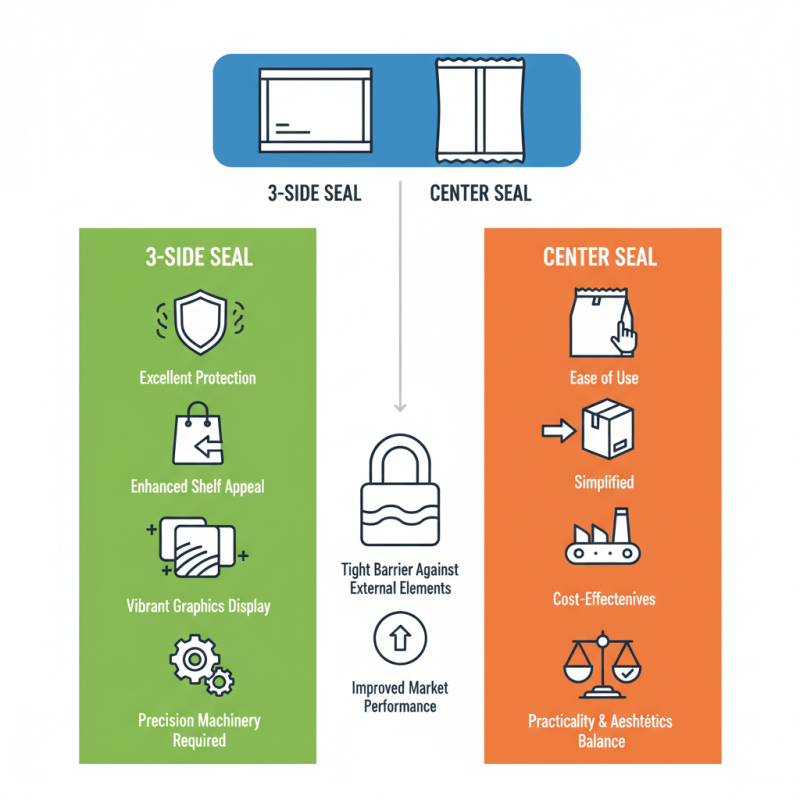
Packaging is an essential aspect of product presentation and preservation. Among various methods, the 3-Side-Seal and Center Seal packaging styles stand out for their unique advantages. Both methods provide excellent protection for products while ensuring ease of use for consumers. The 3-Side-Seal Center Seal offers a tight barrier against external elements, making it ideal for food items and other sensitive products.
Choosing the right packaging can significantly impact a product's market performance. The 3-Side-Seal Center Seal design simplifies the packaging process and enhances shelf appeal. It allows brands to display vibrant graphics on three sides, catching consumers' attention. This feature is crucial in today's competitive landscape where visual marketing is key.
However, there are challenges associated with these packaging types. For instance, producing 3-Side-Seal Center Seal bags can require more precise machinery. Brands must weigh the cost-effectiveness of their choice against the visual and physical benefits. A balance between practicality and aesthetics is essential for successful packaging strategies. Understanding these nuances can lead to better decisions in packaging design and execution.
Overview of 3 Side Seal Packaging Advantages
3 side seal packaging offers numerous advantages that enhance product protection and shelf appeal. This type of packaging creates a strong seal on three sides, keeping the contents secure. The design is ideal for various products, including snacks, powders, and liquids. It effectively inhibits moisture and air from entering, prolonging shelf life.
One notable benefit is the efficient use of materials. The minimalistic design reduces waste and lowers production costs. This can be an essential factor for businesses focused on sustainability. However, some may find that the simplicity of 3 side seal packaging can limit promotional space. This lack of area for branding can pose challenges in a competitive market.
Additionally, the ease of opening is a practical consideration. Consumers appreciate packaging that is user-friendly. Many 3 side seal packs can be torn open without tools, enhancing convenience. Yet, achieving the right balance between security and accessibility can be tricky. Manufacturers must consider the contents and customer needs when designing these packages.
Exploring the Benefits of Center Seal Packaging
Center seal packaging offers unique advantages for various products. This method creates a secure seal at the center of the package. It ensures a tight closure, reducing the risk of contamination. Packaging is also visually appealing, making it stand out on shelves. The simplicity of this design allows for efficient use of materials. Reducing excess packaging lowers costs while benefiting the environment.
The center seal design offers versatility for many products. It can accommodate different shapes and sizes. However, this method may not suit every item. Some fragile products may require extra protection. It's essential to match packaging type with the product's needs. This thoughtful approach can enhance customer satisfaction. Despite its benefits, businesses must also consider the potential for production limitations. Certain machines may struggle with this sealing technique. Balancing these factors is key to successful packaging solutions.
Understanding the Benefits of 3 Side Seal and Center Seal Packaging
| Packaging Type |
Benefits |
Ideal Use Cases |
| 3 Side Seal |
Enhanced product visibility, easy opening, and cost-effective production. |
Snacks, frozen food, and medical supplies. |
| Center Seal |
Stronger seal integrity, longer shelf life, and reduced risk of contamination. |
Liquids, powders, and fragile items. |
| 3 Side Seal |
Customizable sizes, minimal material use, and lightweight design. |
Confectionery, dried fruits, and pet treats. |
| Center Seal |
Improved branding opportunities and enhanced tamper evidence. |
Pharmaceuticals, sauces, and gourmet food products. |
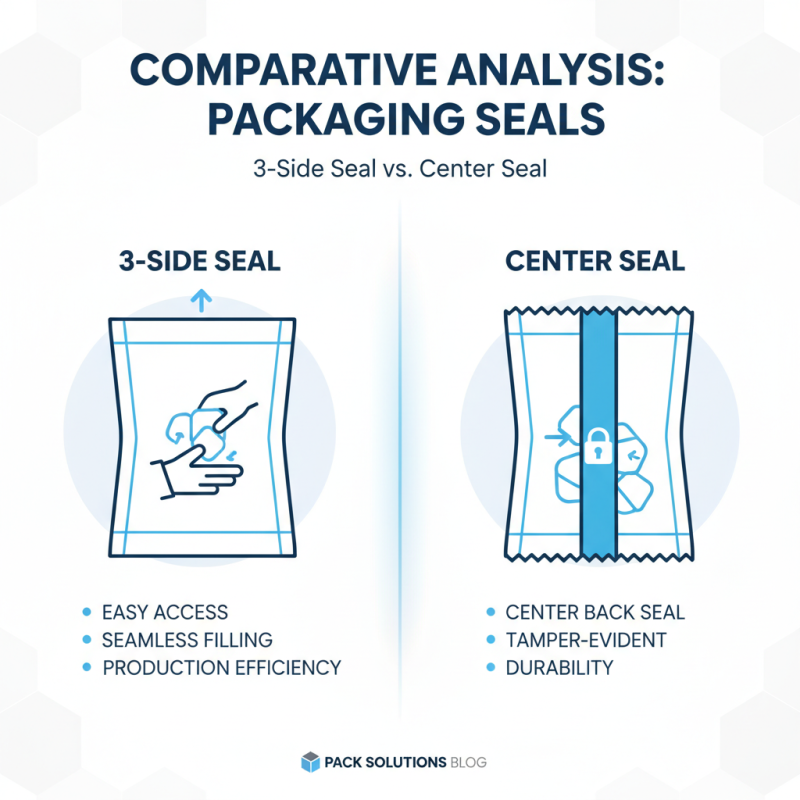
Comparative Analysis: 3 Side Seal vs. Center Seal Packaging
When comparing 3 side seal and center seal packaging, it's essential to understand their unique benefits. The 3 side seal bag is often preferred for products that require easy access. It opens from three sides and allows for seamless filling. This design enhances speed and efficiency during production.
Center seal packaging, on the other hand, offers an appealing presentation. The bag opens from the top and bottom, creating a clean look. It's ideal for products that need a strong visual impact on shelves. Each seal design has its advantages, but the choice depends on the product type and market needs. Both styles have room for improvement in areas like sustainability.
Tips: Consider the material you use. It affects both durability and presentation. An eco-friendly choice can enhance your brand image. Test your packaging with actual products. This reveals practical challenges. Adapt as needed for better performance.
Applications and Industries Utilizing Seal Packaging
Seal packaging is essential in various industries, from food to pharmaceuticals. The 3 side seal and center seal methods are widely adopted in these sectors. According to a recent study by Freedonia Group, the demand for flexible packaging is projected to grow by 4.3% annually, reaching $281 billion by 2024. This growth indicates the versatility and effectiveness of these sealing techniques.
In the food industry, 3 side seal packaging offers excellent protection against moisture and contaminants. A report from Packaging World states that this type of packaging enhances shelf life by 30% to 50%. This is crucial for perishables where freshness matters. Manufacturers often struggle to balance cost and quality. Center seal packaging, on the other hand, is utilized for bulk items, ensuring easy access and reduced waste.
Pharmaceutical companies are also turning to seal packaging for sensitive products. According to Smithers Pira, up to 70% of pharmaceutical products are now packaged using advanced sealing techniques. There are challenges in maintaining product integrity during transportation. Thus, the choice between 3 side and center seals can affect both safety and efficiency. Industries must continue to innovate and refine their processes to enhance both functionality and sustainability in packaging.
Understanding the Benefits of 3 Side Seal and Center Seal Packaging
This chart illustrates the growing adoption of 3 Side Seal and Center Seal packaging across different industries over the past five years. The data showcases the percentage increase in usage within specific sectors, emphasizing the versatility and efficiency of these packaging types.
Sustainability Impacts of 3 Side and Center Seal Options
The packaging industry faces increasing pressure to adopt sustainable practices. Three-side seal and center seal packaging options are two popular choices. Both have unique impacts on sustainability.
Three-side seal packaging often uses less material than other types, which reduces waste. A study by Packaging Strategies showed that using this method can decrease material consumption by up to 30%. The efficiency of the design allows for easy stacking, leading to lower transportation costs. However, it's worth noting that not all materials used are biodegradable. This unfinished aspect raises questions about the true sustainability of certain options.
Center seal packaging presents its own challenges and benefits. It offers excellent barrier properties, making it suitable for various products. Reports indicate that many consumers prefer this type for its durability. Still, the environmental cost of producing these robust materials can be significant. A significant portion of plastic used in center seal packaging is not recycled. According to the EPA, only 9% of plastic gets recycled in the U.S. This statistic urges a deeper look at the lifecycle of packaging choices.