10 Best Food Tube Suppliers for Global Buyers?
Food Tube packaging is moving from a niche format toward a serious global sourcing opportunity. Its advantages are practical: low product exposure, controlled dispensing, compact storage, and strong branding on small retail shelves. These benefits matter for sauces, tomato paste, baby food, purées, nutritional products, and other portion-sensitive foods.
Market evidence supports this shift. Smithers forecasts continued growth in global flexible packaging, driven by convenience, lightweight materials, and improved recyclability. Grand View Research also reports steady expansion in the global tube packaging market through 2030, supported by food, pharmaceutical, and personal-care applications. However, broad market figures can hide important differences. Food-grade barrier layers, filling compatibility, cap design, and transport performance still require careful verification.
Pierre Pienaar, a packaging-industry expert and former World Packaging Organisation president, has often described packaging as “the silent salesman.” The idea is useful here. A Food Tube must protect the product, communicate trust, and dispense cleanly under real kitchen conditions. It should survive hot warehouses, long sea routes, and repeated squeezing without leaking.
But choosing suppliers is not simple. A low unit price may conceal high minimum orders, weak technical support, or inconsistent seal quality. Some suppliers also make sustainability claims that need evidence. This guide examines ten Food Tube suppliers for global buyers, comparing materials, certifications, production capacity, customization, filling support, and export experience. The ranking is not perfect. Buyer requirements differ. Still, these practical criteria can make supplier evaluation more transparent, more measurable, and less dependent on attractive catalogs.
Sources: Smithers, The Future of Flexible Packaging to 2028; Grand View Research, Tube Packaging Market Size, Share and Trends Analysis Report.
What Are Food Tubes and Why Do Global Buyers Need Them?
10 Best Food Tube Suppliers for Global Buyers?
What Are Food Tubes and Why Do Global Buyers Need Them?
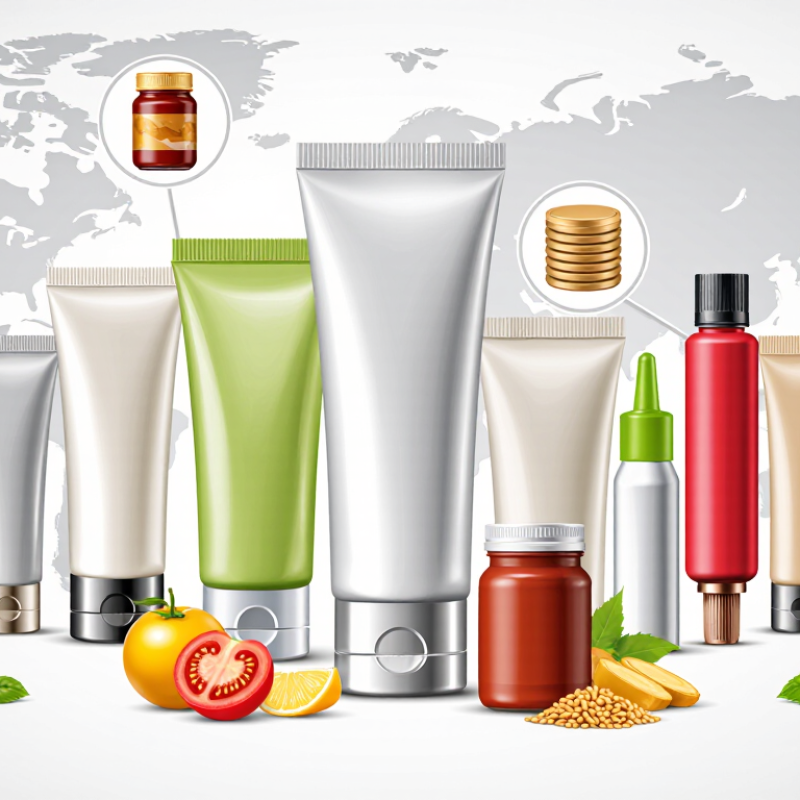
Food tubes are cylindrical containers designed for sauces, pastes, creams, and soft foods. They usually combine squeezable layers with a sealed opening and protective cap. Common materials include plastic, laminate, and aluminum. Small details matter. A narrow nozzle controls portions and reduces mess during use. A secure cap protects the product after opening. For global buyers, tubes can simplify filling, storage, transport, and retail display.
The FAO’s State of Food and Agriculture 2019 reported that about 14% of food is lost between harvest and retail. Tubes cannot solve food loss alone. However, suitable barriers may help protect sensitive products from oxygen, moisture, and light. UNEP’s Food Waste Index Report 2024 estimated 1.05 billion tonnes of food were wasted in 2022. That figure demands restraint. Buyers should assess shelf-life performance, not just appearance or unit price.
A responsible sourcing review should request migration test results, seal-integrity data, and batch traceability. Check cap torque, tube flexibility, print durability, and carton protection during shipment. Packaging tests should match the destination climate. “Food-grade” alone is not enough. Material choices also deserve honest review, because multilayer tubes can complicate recycling. It is easy to overvalue glossy design. The better question is whether the tube protects food reliably, dispenses cleanly, and meets documented market requirements.
Key Criteria for Evaluating Food Tube Suppliers
10 Best Food Tube Suppliers for Global Buyers
Key Criteria for Evaluating Food Tube Suppliers
Choosing among food tube suppliers requires more than comparing unit prices. Smithers’ 2024 flexible packaging outlook values the global market at over US$300 billion, with food applications driving strong demand. This scale can hide quality differences. Examine tube materials, oxygen barriers, cap fit, filling-line compatibility, and seal strength. Ask for food-contact declarations, migration test results, batch traceability, and recent third-party audit records. ISO 22000 or equivalent systems can support confidence, but certificates alone are not proof of consistent production.
A capable supplier should provide clear technical drawings and controlled samples before mass production. Check minimum order quantities, tooling fees, lead times, storage conditions, and failure-response procedures. PMMI’s 2024 packaging data highlights continuing pressure for automation and flexible production, so suppliers should explain changeover times and line-speed testing. Sustainability also needs evidence. Request material-weight data, recycled-content claims, and end-of-life guidance instead of accepting vague green language. Some suppliers communicate well but document poorly. That is a warning sign.
Tips: Test filled tubes under heat, cold, transport vibration, and repeated opening. Keep samples from every approval stage. Compare actual waste rates, not only quoted prices. A small pilot order is often wiser than a large promise. I would also question unusually short lead times; they may reflect stock limits, not manufacturing strength. Recheck every claim against current regional requirements and independent laboratory records.
Top Food Tube Suppliers for International Purchasing
Top Food Tube Suppliers for International Purchasing
International buyers need more than a low unit price when selecting food tube suppliers. Product safety, barrier performance, and export experience matter equally. The Smithers report, The Future of Flexible Packaging to 2028, valued global flexible packaging demand at more than US$200 billion in 2023. This scale shows strong competition, but quality still varies between factories. Buyers should request food-contact declarations, migration test results, batch traceability, and production samples before signing a contract.
Barrier selection must match the product. Acidic sauces, fruit purées, dairy fillings, and oily pastes can react differently with packaging layers. Aluminum tubes offer strong light protection, while multilayer plastic tubes may provide better squeezing and recycling options. Cap torque, seal strength, nozzle size, and filling temperature also need written specifications. Small details matter. A leaking shoulder can damage an entire shipment.
The FAO has reported that 13.2% of food is lost between harvest and retail globally. Reliable tube packaging can reduce exposure to oxygen, moisture, and contamination, especially during long-distance transport. However, packaging alone cannot solve waste. Suppliers should explain material sourcing, warehouse conditions, inspection procedures, and corrective actions. International buyers may compare landed cost, not only factory price. Currency changes, tooling fees, customs documents, and rejected cartons can alter the final result. I would also test samples under realistic storage conditions. Laboratory data is useful, but real handling sometimes reveals weaknesses.
Top Food Tube Suppliers for International Purchasing
This illustrative 100-point purchasing scorecard highlights the practical criteria global buyers commonly use when evaluating food tube suppliers. Food-contact compliance and barrier performance receive the highest weighting because they directly affect product safety, shelf life, and export readiness.
The scores represent a structured procurement benchmark rather than company-specific performance or a market-share ranking. Buyers should validate certifications, specifications, testing records, minimum order quantities, and delivery terms with each supplier.
Comparing Supplier Quality, Pricing, Certifications, and Capacity
Choosing among the 10 best food tube suppliers requires more than comparing catalog prices. Smithers’ Future of Packaging to 2028 forecasts global packaging demand will reach about $1.33 trillion by 2028. That growth increases supplier pressure, but not every factory scales safely. I recommend checking resin traceability, wall-thickness controls, seal strength, and batch inspection records. Request recent food-contact migration reports, not generic certificates.
Certification quality matters. The ISO Survey 2023 recorded more than 1.26 million ISO 9001 certificates worldwide, so ISO 9001 alone does not prove food-packaging competence. Look for ISO 22000 or equivalent food-safety systems, documented GMP procedures, and recognized packaging-material certification. Verify certificate scope, expiry dates, manufacturing sites, and audit bodies. A certificate covering an office may hide production weaknesses. It happens.
Pricing should include tooling, samples, printing plates, testing, freight, duties, and rejected units. Ask for pricing at three volumes, such as 10,000, 100,000, and 500,000 tubes. Compare cost per usable tube, not quoted unit price. Capacity also needs evidence. Review monthly output, current utilization, lead times, backup equipment, and contingency plans for resin shortages. I once treated a supplier’s maximum capacity as normal capacity. That was careless. A realistic supplier should provide production schedules, inspection photos, and references from comparable food applications. Small details expose large risks.
How to Select the Right Food Tube Supplier for Your Market
Choosing among the 10 best food tube suppliers requires more than comparing prices. Start with the product itself. A creamy sauce may need a stronger oxygen barrier, while fruit puree may require flexible squeezing and clean dispensing. Ask suppliers for food-contact documentation, material specifications, migration test results, and batch traceability. Reliable answers should include dates, testing methods, and responsible contacts.
Check whether the tube fits your filling equipment. Measure the opening, shoulder shape, cap, sealing method, and tube diameter. Request production samples before approving large orders. Test them on your real filling line, not only by hand. Observe leakage, deformation, printing quality, and cap performance after transport. A supplier with practical packaging knowledge should also discuss minimum order quantities, lead times, storage conditions, and export documentation.
Small details matter.
Review the supplier’s quality controls and audit process. Ask how they manage raw material changes, color variation, complaints, and product recalls. Their factory may look impressive, yet weak communication can create expensive delays. I have seen buyers focus too heavily on unit cost and overlook inconsistent tube dimensions. That mistake can stop a filling line. Still, no evaluation is perfect. Market testing may reveal consumer preferences that laboratory checks miss. Compare at least three quotations, verify references from similar applications, and record every requirement in writing before signing a supply agreement.