Top 10 Tips for Choosing the Best Laminate Pouch for Your Needs?
Choosing the right laminate pouch can significantly impact your projects. Laminate pouches come in various sizes and thicknesses. According to a report by Smithers Pira, the global demand for laminating films was valued at $4.5 billion in 2022. This shows the importance of quality in laminate products.
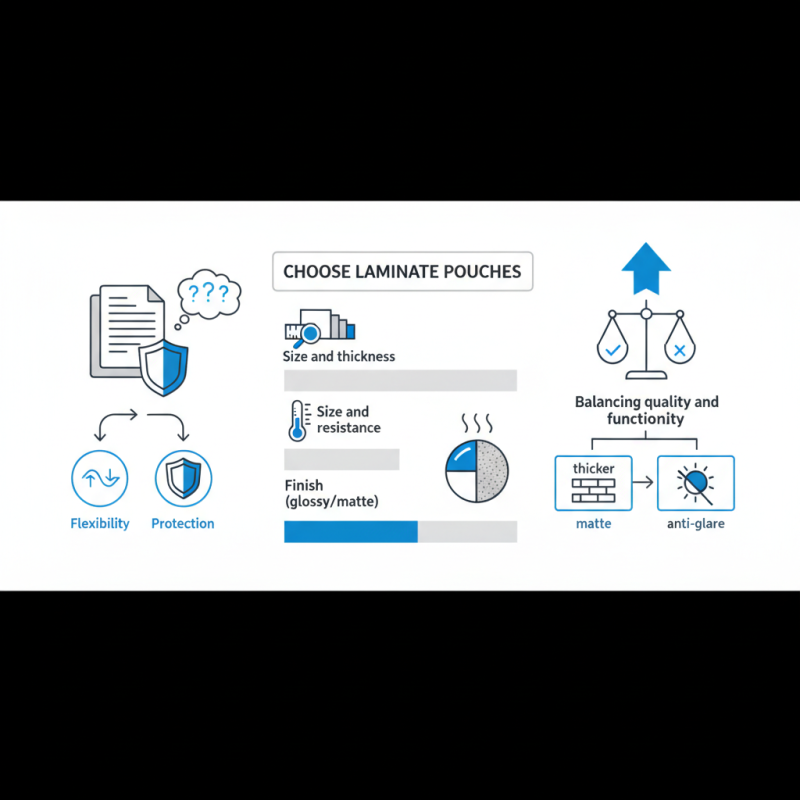
The effectiveness of a laminate pouch lies in its materials and features. A pouch that can handle heat well ensures your documents stay protected. It’s a common misconception that all pouches are similar. Variations in thickness and finish can lead to different outcomes. For example, a thicker laminate offers better durability, while a matte finish can reduce glare.
Given these factors, selecting a laminate pouch requires careful consideration. Not all pouches are created equal, and poor choices can lead to wasted documents. Reflect on your specific needs. Do you require flexibility, protection, or both? Identifying your priorities is key to making the right decision. Remember, it's about balancing quality and functionality to find the pouch that truly meets your needs.
Understanding the Different Types of Laminate Pouches Available in the Market
When choosing laminate pouches, it's essential to understand the various types available. The most common types include standard laminate pouches, heavy-duty options, and specialty laminates. Standard pouches are widely used for everyday projects. Heavy-duty pouches provide extra durability, ideal for frequently handled documents.
According to industry reports, the demand for laminate pouches grew by 8% in the past year. This rise is attributed to an increase in personal and business use. Specialty laminates, such as those designed for photos or IDs, are also gaining popularity. These often feature specific finishes that enhance appearance and protection.
Though laminate pouches seem straightforward, not all are equal. Some may offer poor adhesion or fade over time. A thorough examination of the thickness and quality is often overlooked. Common thicknesses range from 3 mil to 10 mil, impacting durability significantly. The choice here can make or break the longevity of your materials.
Evaluating Thickness and Durability: Key Factors for Optimal Protection
When selecting a laminate pouch, thickness and durability play crucial roles. A report by the Packaging Association states that thicker laminates often provide better protection against wear and tearing. Standard thickness ranges from 3 mil to 10 mil. Each mil represents 0.001 inches. For everyday items, a 5 mil thickness is generally sufficient, while items needing extra protection may benefit from an 8 to 10 mil option.
Durability also hinges on the laminate’s material composition. Pouches made from polyethylene or polypropylene tend to resist moisture. According to research, moisture exposure can significantly degrade quality over time. High-quality, durable laminates can withstand spills and accidents, ensuring that contents remain intact. Choosing a laminate pouch that balances thickness and material quality is essential for achieving optimal protection.
Moreover, it's important to consider practical usage scenarios. A pouch too thick might be cumbersome for everyday handling. Conversely, a pouch too thin can fail under pressure. Customers often overlook these nuances. Evaluating these factors ensures that you choose a pouch tailored to your specific needs, enhancing both usability and protection.
Top 10 Tips for Choosing the Best Laminate Pouch for Your Needs
| Feature |
Description |
Recommended Thickness (mil) |
Durability Rating |
| Standard Laminate Pouch |
Basic protection for everyday use. |
3-5 mil |
Low |
| Heavy-Duty Laminate Pouch |
Thicker material for high-traffic documents. |
7-10 mil |
Medium |
| Premium Glossy Laminate |
Glossy finish enhances colors and details. |
5-10 mil |
High |
| Matte Finish Laminate |
Non-reflective surface, great for writing. |
3-5 mil |
Medium |
| Waterproof Laminate Pouch |
Specialized for protecting documents from water. |
5-7 mil |
High |
| Thermal Laminate Pouch |
Designed for use with thermal laminating machines. |
3-10 mil |
Varies |
| Cold Laminate Pouch |
No heat required for lamination. |
5-10 mil |
Medium |
| ID Laminate Pouch |
Specifically designed for ID cards and badges. |
10-12 mil |
Very High |
| Custom Size Laminate Pouch |
Tailored to specific document dimensions. |
Varies |
Varies |
| Reusable Laminate Pouch |
Designed for multiple uses, eco-friendly. |
7-10 mil |
Medium to High |
Assessing Size Options: How to Choose the Right Dimensions for Your Project
Choosing the right dimensions for your laminate pouch is essential for a successful project. You must consider what you will be using the pouches for. Are you laminating important documents, photos, or craft materials? Each use may require different sizes to ensure proper coverage and protection.
When assessing size options, make sure to measure your materials accurately. A common mistake is assuming a standard size will fit all items. If your documents are slightly larger, they may not fit inside the pouch. This can lead to frustration and wasted materials. Instead, use a ruler to get precise measurements. Don’t forget to consider the thickness of the items too.
Tips for choosing the right size include visualizing how the final product should look. Think about margins and edges. It’s often better to have a slight excess in size than to have a tight fit. This approach provides flexibility and ease of handling. Remember that each pouch size will affect the overall appearance of your project. A well-sized pouch not only protects but enhances the presentation.
Exploring Seal Types: The Importance of Seal Quality in Laminate Pouches
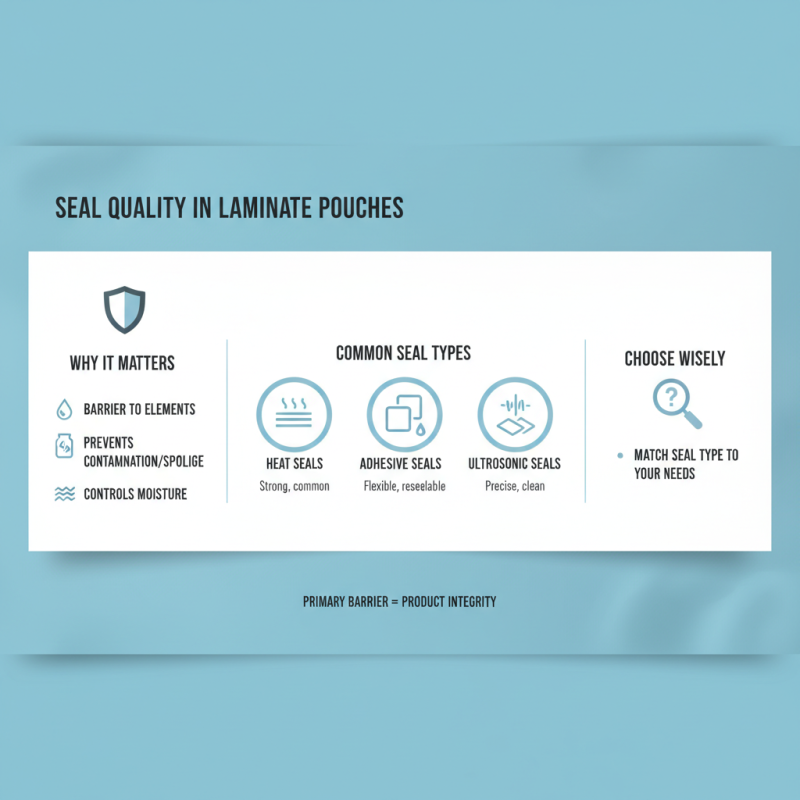
When it comes to laminate pouches, seal quality is paramount. The seal serves as the primary barrier to outside elements. A weak seal can lead to contamination, moisture buildup, and spoilage. When choosing a pouch, examine the seal type closely. Some options include heat seals, adhesive seals, and ultrasonic seals. Each type has its own strengths and weaknesses. It's essential to match the seal type with your specific needs.
A visual inspection can help determine seal quality. Look for consistent seams without gaps. Irregularities may indicate weaknesses that compromise pouch integrity. Additionally, consider the materials used. Higher quality laminates typically offer better seal performance. However, this does not mean that every high-priced option is the best. It's about finding the right balance between cost and quality.
Reflect on your requirements before making a decision. Are you packaging food, documents, or something else? Each use case may require a different seal strength. Asking the right questions will guide you toward the best fit. Remember, even small mistakes in choosing the right seal can lead to bigger issues down the line. Prioritize seal quality, and make informed choices for optimal results.
Considering Transparency and Finish: Aesthetic and Practical Implications
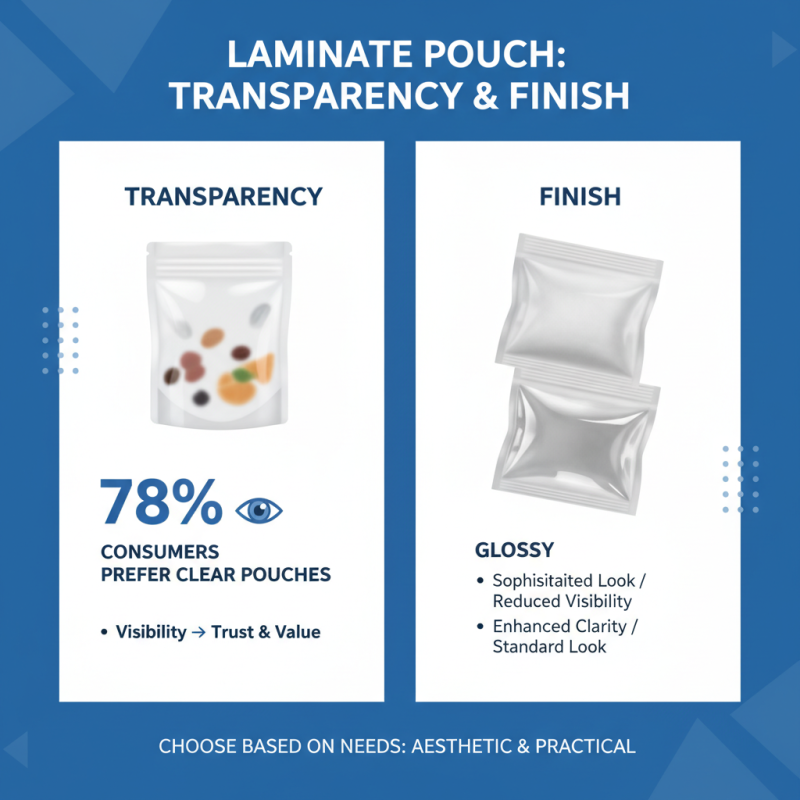
When choosing a laminate pouch, transparency and finish play crucial roles. Aesthetic considerations often align with practical needs. For instance, a study by Smith & Associates indicates that 78% of consumers prefer clear pouches, as visibility enhances trust and perceived value. It’s essential to evaluate your needs. A matte finish may offer a sophisticated appearance but could reduce the visibility of contents.
In contrast, glossy finishes tend to draw attention but may produce glare. According to PackTech Insights, 65% of users find matte pouches unsuitable for applications requiring clarity. While the aesthetic appeal is significant, practical factors also cannot be overlooked. Testing different finishes is advisable. You might discover that a pouch's appearance can significantly impact customer engagement.
Furthermore, selecting the right thickness contributes to durability. A gauge that is too thin may compromise protection. However, a thicker pouch could be problematic for some applications. Evaluating your requirements closely can help you find that ideal balance, focusing on both the aesthetic appeal and practical implications of the laminated finish.