Choosing the best Stand-Up Pouch manufacturer in China requires more than comparing prices on a spreadsheet. The right partner must understand materials, filling conditions, product protection, printing accuracy, and delivery pressure. A low quotation may look attractive. Later, weak seals, uneven gussets, or color variation can become expensive problems.
Walter Soroka, author of Fundamentals of Packaging Technology, wrote, “Packaging is a system of preparing goods for transport, distribution, storage, sale, and use.” That principle matters when evaluating a Stand-Up Pouch supplier. A capable manufacturer should explain how film structures match moisture, oxygen, light, aroma, and mechanical requirements. They should also provide clear samples, production records, quality procedures, and relevant certifications. Ask to inspect seal strength, drop-test results, zipper performance, and dimensional consistency. Do not rely only on polished factory photographs.
Look closely.
Factory experience should be visible in practical details. Are raw materials traceable? Are printing colors checked against an approved proof? Can the supplier maintain the same pouch dimensions across repeated orders? How quickly do they respond when a specification changes? These questions reveal more than a sales presentation.
A factory visit or independent inspection can strengthen confidence. However, no checklist is perfect. Even experienced buyers may overlook filling-line compatibility or transportation conditions. That is why a small trial order deserves serious attention. The best manufacturer is not always the largest one. It is the partner that communicates honestly, documents its process, and improves when something goes wrong.
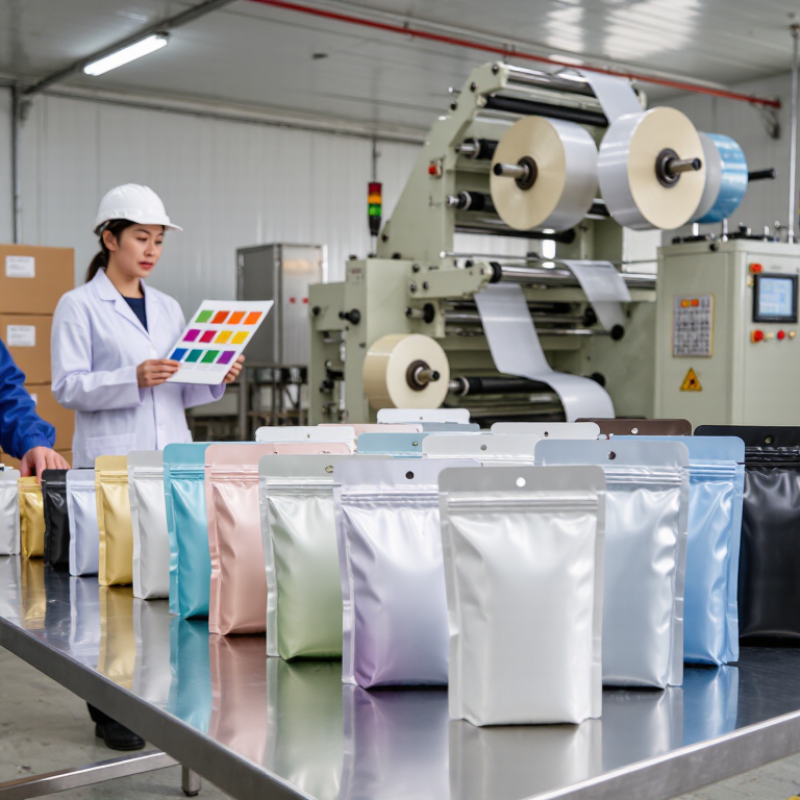
Choosing a stand up pouch manufacturer begins with a clear product brief.
Start with the product. Define its weight, volume, shape, and filling temperature. A 250-gram powder pouch needs different dimensions from a 500-gram snack pouch. Measure twice. Record the filled pouch height, seal width, and usable headspace. Small errors can affect shelf display and packing efficiency.
Specify the material structure according to real storage conditions. Consider moisture, oxygen, light, aroma, puncture, and grease resistance. Products needing longer shelf life may require a stronger barrier layer. Ask for technical data, migration documentation, and relevant test reports. Do not rely on attractive samples alone. A pouch can look excellent yet fail during transport or heat sealing. Include the closure type, tear notch, spout position, and preferred surface finish. Matte films hide fingerprints, but glossy films often show graphics more clearly.
Your brief should also state printing colors, artwork format, order quantity, delivery target, and quality tolerances. Request a pre-production sample using the intended structure. Test it with your actual filling equipment and storage conditions. Test it early. Check seal strength, leakage, zipper performance, and standing stability. A first specification is rarely perfect. You may discover that a wider base improves shelf balance, or that a softer film wrinkles near the seal. Record these findings and revise the brief before comparing manufacturers. A reliable supplier should answer specific questions clearly, explain limitations, and provide traceable quality records.
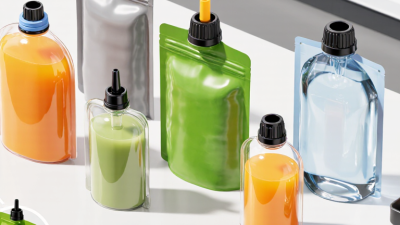
Choosing a stand up pouch manufacturer in China requires more than comparing prices. Verify experience with your pouch structure, filling method, and barrier requirements. Ask for recent production samples, not only catalog photos. Check whether the factory controls sealing temperature, film tension, zipper placement, and print registration. Small deviations can cause leaks or poor shelf presentation.
The Flexible Packaging Association’s 2024 industry report valued U.S. flexible packaging sales at approximately 42.9 billion dollars in 2023. This scale increases pressure on suppliers to deliver consistently. Review ISO 9001 records, audit reports, and certificate validity through the issuing body. For food packaging, request relevant food-contact compliance documents and migration test results. The ISO Survey 2022 recorded more than 1.2 million ISO 9001 certificates worldwide, so certification alone is not proof of strong pouch manufacturing. I have seen factories present excellent documents but weak process control. That gap deserves attention.
Tips: Request a live video tour of printing, lamination, pouch-making, and inspection areas. Ask for monthly output, machine numbers, order lead times, and peak-season capacity. Confirm whether quality checks are recorded by batch. A useful supplier should explain rejected-roll handling and traceability clearly. Also test a pilot order before committing to large volumes. A factory may claim high capacity, yet production planning can remain surprisingly fragile.
Choosing a stand up pouch manufacturer in China starts with the material structure. Polyethylene offers flexibility and strong sealing. PET and BOPP improve stiffness and surface appearance. High-barrier films help protect products from oxygen, moisture, and light. Paper-based laminates look natural, but they may need plastic layers for reliable protection. The Flexible Packaging Association reported that the United States flexible packaging market reached about 39.8 billion dollars in sales in 2023. This growth increases material choices, but also makes supplier comparisons harder.
Customization should match product needs, not only visual preferences. Ask for pouch samples with zipper strength, seal width, gusset shape, and filling performance. Options may include tear notches, handles, windows, spouts, matte finishes, and recyclable structures. Smithers has forecast continued global flexible packaging growth through 2028, driven partly by convenience and lightweight formats. Still, a fashionable design can fail during transport. I have seen attractive pouches lose shape because the bottom gusset was too weak.
Tips: Request written material specifications, migration documents, and sample test results. Check print registration, color consistency, barcode readability, and rub resistance. ISO 12647-2 provides a useful reference for process control in color printing. Compare printed samples under the same lighting. Digital printing may suit short runs, while flexographic or gravure printing can reduce unit costs at higher volumes. Do not judge quality from one sample only. Ask for production samples. Mistakes often appear later.
Comparison of common pouch structures using practical selection criteria. Scores are benchmark-style ratings on a 1–5 scale, where 5 indicates stronger barrier performance, customization flexibility, or print suitability.
For products sensitive to oxygen, moisture, or light, multilayer structures generally provide higher protection. Ask manufacturers to confirm the exact film structure, thickness, sealing performance, color proofing process, and production tolerances before placing an order.
Choosing a stand up pouch manufacturer in China requires more than comparing the lowest quotation. Ask for a detailed price breakdown covering film structure, printing, zipper options, tooling, packaging, and delivery. A cheap unit price may exclude setup fees or ocean freight. Confirm the quotation’s currency, trade terms, validity period, and payment schedule in writing.
Minimum order quantities can vary by pouch size, material, and printing method. Ask whether the MOQ applies to each design or the total order. Samples should match the proposed production structure, not a random stock pouch. Test the seal, zipper movement, pouch stability, odor, thickness, and resistance to punctures. Request technical data sheets and inspection records. A sample can look excellent and still fail during filling.
Lead time should include artwork approval, material purchasing, cylinder preparation, printing, lamination, curing, cutting, and final inspection. Ask for a production schedule with realistic buffer days. I once underestimated curing time, and the shipment moved later than expected. That mistake was avoidable. A reliable manufacturer explains delays early and shares measurable checkpoints, such as sample approval and pre-shipment inspection. Video calls, factory photos, and independent inspections can support your assessment, but they do not replace clear specifications. Leave room for revision. The first quotation is rarely the final cost.
| Evaluation Dimension | Entry-Level Flexible Packaging Manufacturer | Mid-Scale Custom Pouch Manufacturer | High-Volume Integrated Manufacturer | What Buyers Should Verify |
|---|---|---|---|---|
| Typical Product Scope | Standard stand up pouches with basic finishes | Custom printed pouches, resealable zippers, spouts, and windows | Large-scale production of food, pet food, coffee, and specialty pouches | Whether the factory regularly produces the pouch structure and features required for your product |
| Indicative Unit Price | Approximately US$0.04–US$0.18 per pouch for standard formats at volume | Approximately US$0.08–US$0.35 per pouch, depending on size, layers, printing, and accessories | Approximately US$0.05–US$0.25 per pouch for repeat, high-volume orders | Compare the same dimensions, material thickness, number of colors, finish, zipper, spout, and delivery terms |
| Common Minimum Order Quantity | About 5,000–20,000 pieces per size or design | About 10,000–50,000 pieces per design, especially for rotogravure printing | About 30,000–100,000 pieces per design for efficient mass production | Ask whether the MOQ applies per artwork, size, material structure, or total order quantity |
| Digital Printing Option | Often available for short runs and market testing | Usually available, with lower setup costs than cylinder-based printing | Available at selected facilities; conventional printing is often preferred for large runs | Confirm color accuracy, printable area, resolution, and whether digital MOQ differs from standard MOQ |
| Sample Cost | Plain samples may be free; customized samples commonly cost US$30–US$150 plus freight | Customized samples commonly cost US$50–US$250 plus freight | Sample charges commonly range from US$100–US$500 when cylinders, plates, or special tooling are required | Check whether sample charges are refundable after a confirmed production order |
| Sample Lead Time | Approximately 3–7 working days for stock or plain samples | Approximately 7–15 working days for printed or structurally customized samples | Approximately 10–20 working days when tooling, proofing, and multiple approvals are involved | Request a written approval schedule covering artwork, color proof, structure, and physical sample sign-off |
| Mass Production Lead Time | Approximately 15–25 working days after artwork and payment approval | Approximately 20–35 working days after final approval | Approximately 25–45 working days for complex or high-volume orders | Confirm whether lead time starts after deposit, artwork approval, cylinder approval, or raw-material confirmation |
| Material Structures | Common PET/PE or basic laminated structures | PET/PE, PET/MPET/PE, PET/AL/PE, kraft paper laminates, and recyclable options | Broad material portfolio with barrier, retort, recyclable, and high-strength structures | Request the full layer structure, thickness, barrier data, and food-contact declarations where applicable |
| Available Features | Zipper, tear notch, hang hole, and basic matte or gloss finish | Spouts, degassing valves, rounded corners, laser scoring, windows, and shaped profiles | Advanced spouts, retort capability, child-resistant options, high-speed filling compatibility, and specialty finishes | Confirm compatibility with your filling equipment, product weight, temperature, and distribution conditions |
| Quality Control | Basic visual inspection and quantity checks | Dimensional checks, seal-strength testing, print inspection, and batch records | Documented quality systems, laboratory testing, traceability, and statistical process controls | Ask for inspection standards, acceptable quality limits, test reports, and corrective-action procedures |
| Common Certifications | Certification coverage varies; documentation may be limited | Often able to provide ISO-based quality documents and food-contact compliance documents | More likely to maintain recognized food-packaging, quality, environmental, and social-compliance certifications | Verify certificate validity, scope, issuing body, factory address, and whether it covers the actual production site |
| Payment Terms | Commonly 30% deposit and 70% balance before shipment | Commonly 30% deposit and 70% balance before shipment; terms may vary by order history | Deposit and balance terms are usually negotiated according to order value and cooperation history | Clarify tooling ownership, refund conditions, inspection rights, and payment triggers |
| Best Fit for | Small test orders, simple packaging, and buyers prioritizing low initial commitment | Growing brands needing customization, balanced pricing, and flexible order quantities | Established brands requiring repeat supply, consistent quality, and large production capacity | Match supplier capacity and process controls with your forecast, compliance requirements, and launch schedule |
| Benchmark note: The price, MOQ, sample, and lead-time figures above are indicative ranges commonly used for preliminary sourcing comparisons. Final quotations depend on pouch size, material thickness, barrier requirements, printing method, number of designs, accessories, order volume, packaging method, and shipping terms. | ||||
Assess Communication, Quality Control, and After-Sales Support
Ask for one responsible contact, response times, and written production milestones. During my supplier evaluations, clear answers mattered more than polished presentations. Request drawings, material structures, sealing temperatures, and tolerance ranges before ordering. Small details prevent expensive misunderstandings. A 2023 ISO Survey recorded over 1.2 million ISO 9001 certificates worldwide. Certification helps, but it does not replace direct evidence. Ask to review recent inspection records and corrective-action reports.
Check incoming film, ink adhesion, seal strength, dimensions, and zipper performance. Request test samples from different production lots. Smithers’ flexible packaging outlook projects global market growth above 3% annually through 2028. Higher demand can increase production pressure. Therefore, confirm how the manufacturer controls speed, storage humidity, and batch traceability. An independent laboratory can verify migration, tensile strength, and seal performance when necessary. Numbers matter.
Confirm replacement policies, complaint response times, and responsibility for transport damage. Ask whether the factory keeps retained samples for each batch. This simple practice supports investigation months later. I have seen suppliers communicate well before payment, then respond slowly after delivery. That risk deserves honest discussion. No factory is perfect. A practical trial order may reveal more than a long factory tour. Keep every approval in writing, including color standards and packaging dimensions.