How to Choose the Right Polyethylene Tube for Your Needs?
Choosing the right polyethylene tube can significantly impact efficiency in various industries. Polyethylene tubes are versatile and widely used due to their durability and flexibility. According to a recent market report by Grand View Research, the global polyethylene market is expected to reach USD 263.8 billion by 2027, with tubes playing a critical role.
Expert Dr. Emily Harmon, a leading figure in materials science, states, "Selecting the appropriate polyethylene tube is crucial for optimal performance." Her insights reflect the industry's growing emphasis on quality and specification. The right tube can enhance application efficiency and reduce costs. However, many users still overlook key factors in their selection process.
Improper choices can lead to issues like leaks or structural failure. Users must consider dimension, pressure ratings, and environmental factors. Reflecting on choices made, one might find that initial cost savings can lead to greater losses down the line. Understanding the nuances of polyethylene tubes is essential for making informed decisions that align with both immediate needs and long-term goals.

Understanding Different Types of Polyethylene Tubes and Their Uses
When selecting a polyethylene tube, understanding the variety available is crucial. There are several types of polyethylene, such as low-density (LDPE) and high-density polyethylene (HDPE). LDPE is flexible and ideal for applications requiring bending, such as medical tubing and food processing. In contrast, HDPE is more rigid, making it suitable for water supply systems and battery casings. According to industry reports, HDPE’s demand in the North American market rose by 4% in 2022, reflecting its vital role in various industries.
Polyethylene tubes exhibit different strengths and limitations. For example, while LDPE offers excellent clarity and softness, its durability may not suffice in harsh environments. On the other hand, HDPE excels in resisting impact and weather. A study highlights that nearly 53% of manufacturers prefer HDPE for outdoor applications and infrastructure. Additionally, compatibility with different chemicals must be considered. Certain polyethylene grades can withstand corrosive substances, while others cannot. These factors significantly affect selection and application success.
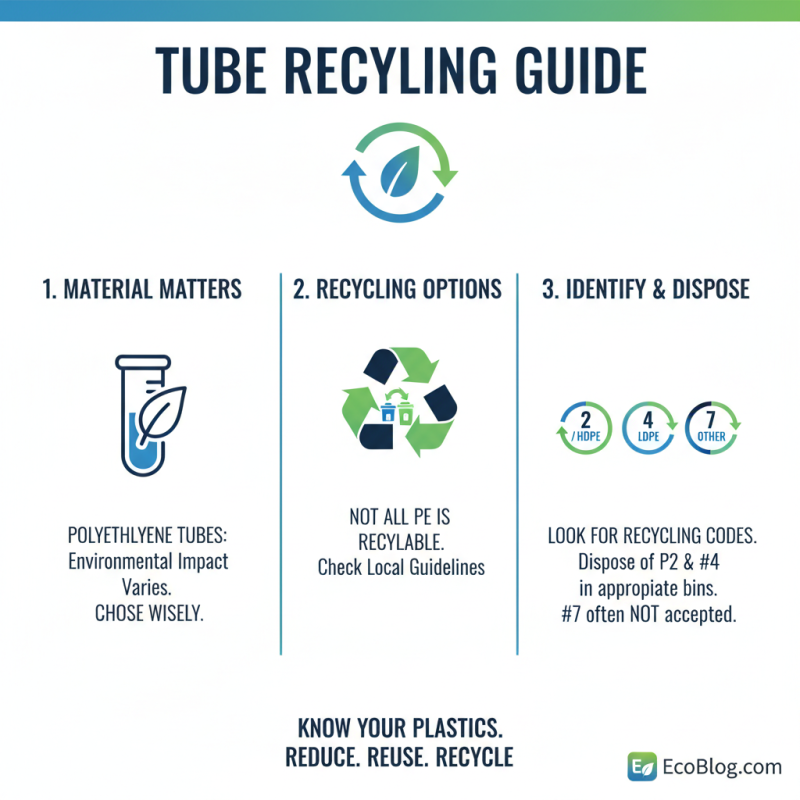
It's essential to weigh these characteristics against your project needs. In some cases, you may find that neither LDPE nor HDPE fits perfectly. Exploring alternatives or hybrid solutions can yield better results. Polyethylene's recyclability is another aspect to reflect on, as environmental concerns grow in the industry. Choosing the right tube requires careful thought and a deep understanding of material properties.
Evaluating the Physical Properties of Polyethylene Tubes
When choosing polyethylene tubes, evaluating their physical properties is essential. Different applications require distinct characteristics. For instance, some projects need flexibility, while others demand rigidity. Understanding how these properties impact your usage is crucial.
One key property to consider is the tube's diameter. A smaller diameter can enhance pressure but may restrict flow rates. Conversely, larger diameters allow for greater flow but may reduce pressure. It's essential to find a balance that suits your specific application. Thickness is another factor. Thicker tubes can withstand higher pressures but can be heavier. This can complicate handling and installation.
Also, consider temperature resistance. Polyethylene tubes can maintain flexibility in diverse conditions, yet extreme temperatures can lead to brittleness. Reflect on how your environment impacts performance. An inadequate evaluation can lead to unanticipated failures, impacting your project’s outcomes. It's essential to approach this choice with a thorough understanding of how physical properties align with your needs. Test different types when possible, to see what works best in real-world scenarios.
How to Choose the Right Polyethylene Tube for Your Needs?
| Property |
Specification |
Description |
| Density |
0.91 - 0.96 g/cm³ |
Lightweight and versatile material characteristic of polyethylene. |
| Working Temperature |
-40°C to +60°C |
Range for maintaining physical properties without deformation. |
| Tensile Strength |
15 - 30 MPa |
Strength before rupture; important for high-stress applications. |
| Flexural Modulus |
200 - 600 MPa |
Measures stiffness; affects the bending performance of the tube. |
| Chemical Resistance |
Good |
Resistant to a wide range of chemicals; suitable for various applications. |
| Transparency |
Translucent |
Allows for visibility of contents; beneficial for monitoring flow. |
Determining the Ideal Diameter and Thickness for Your Application
When selecting a polyethylene tube, the right diameter and thickness are crucial. A suitable diameter ensures optimal flow for fluids or gases. If the diameter is too small, the pressure can build up, causing leaks or bursts. Conversely, a diameter that’s too large may lead to inefficient transport and increased costs. Consider the system's requirements; larger diameter tubes may seem better but aren’t always the solution.
Tube thickness is equally important. Thicker tubes offer more durability but add weight and cost. If your application involves constant movement or exposure to harsh conditions, thicker walls can provide added protection. However, if your needs are less demanding, a thinner tube could suffice. Balancing these factors requires careful consideration of your specific usage.
Don’t overlook the environmental impact of your choice. Some polyethylene tubes may perform better under certain conditions. Additionally, understanding the temperature and pressure ranges can prevent unforeseen issues. Regular evaluations of your tube’s performance are necessary to ensure long-term reliability. Adjustments may be required as your application evolves. Being mindful of these details can help improve your overall experience with polyethylene tubes.
Comparing Cost and Performance of Various Polyethylene Tube Options
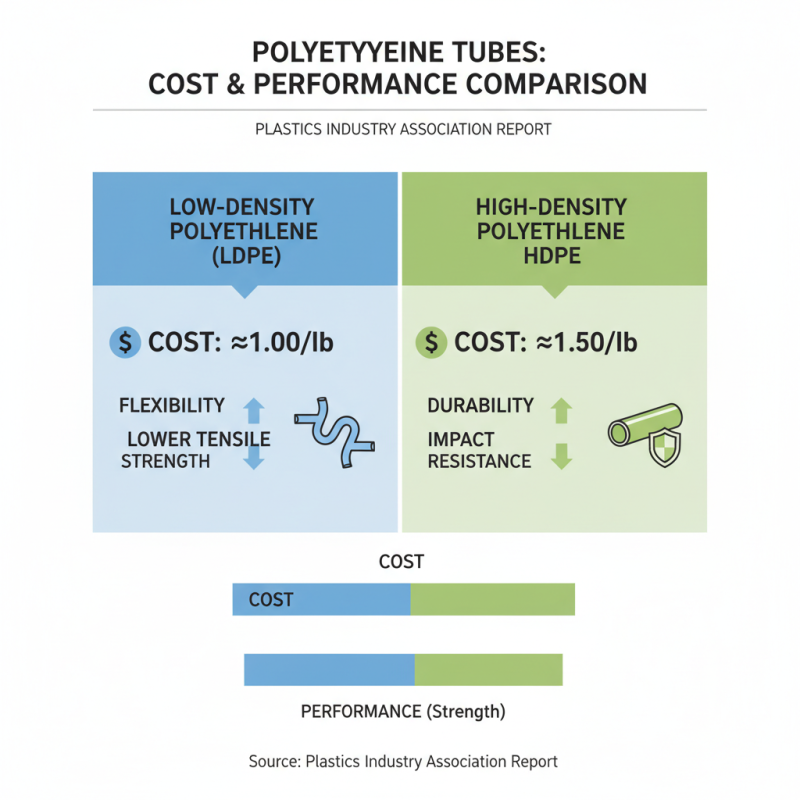
When selecting a polyethylene tube, understanding cost versus performance is essential. A report by the Plastics Industry Association shows that low-density polyethylene (LDPE) costs around $1.00 per pound, while high-density polyethylene (HDPE) can reach $1.50 per pound. This difference in pricing correlates directly with performance; LDPE offers flexibility but lower tensile strength, while HDPE provides better durability and resistance to impact.
Performance metrics also include temperature resistance and chemical compatibility. For instance, HDPE can withstand temperatures up to 120°C, making it superior for applications requiring heat exposure. Conversely, LDPE has limitations, only surviving up to 70°C. In real-world applications, this discrepancy can complicate material selection. Users often underestimate the implications of chemical exposure on tube longevity.
A study from the American Chemistry Council highlights that improper selection of polyethylene tubes led to a 30% increase in failure rates in industrial applications. Users frequently rely on initial cost as their primary decision factor. Long-term performance, however, profoundly affects overall expenditure. Making informed decisions based on performance data can prevent unforeseen costs associated with replacements and downtime.