2026 Best ABL Laminate Film Types for Global Buyers
For global buyers, choosing an ABL Laminate Film is a practical balance of barrier performance, forming behavior, print quality, and line compatibility. A tube that looks smooth on a sample roll may wrinkle at the shoulder or delaminate during sealing. Small trials matter.
Smithers’ global flexible-packaging research and the Flexible Packaging Association’s annual industry report offer useful market context for evaluating materials and supply trends. They do not replace a supplier’s technical data sheet or production trial. Buyers should compare laminate structure, aluminum-layer consistency, adhesive system, seal strength, and documented performance with the intended product. Ask for test conditions, not only headline results.
Packaging educator Walter Soroka defines packaging as “the science, art and technology of enclosing or protecting products for distribution, storage, sale, and use.” That principle applies directly to ABL selection: protect the contents, then confirm the structure runs reliably. A useful comparison starts with barrier needs, tube diameter, decoration, filling conditions, and expected shelf life. Request samples from more than one supplier. Check them on the actual line. A clean laboratory result can still miss a real production problem. This guide compares common ABL laminate film types and the trade-offs buyers should verify before specifying a material for 2026.
What ABL Laminate Film Is and How Its Layers Work
2026 Best ABL Laminate Film Types for Global Buyers
What ABL Laminate Film Is and How Its Layers Work
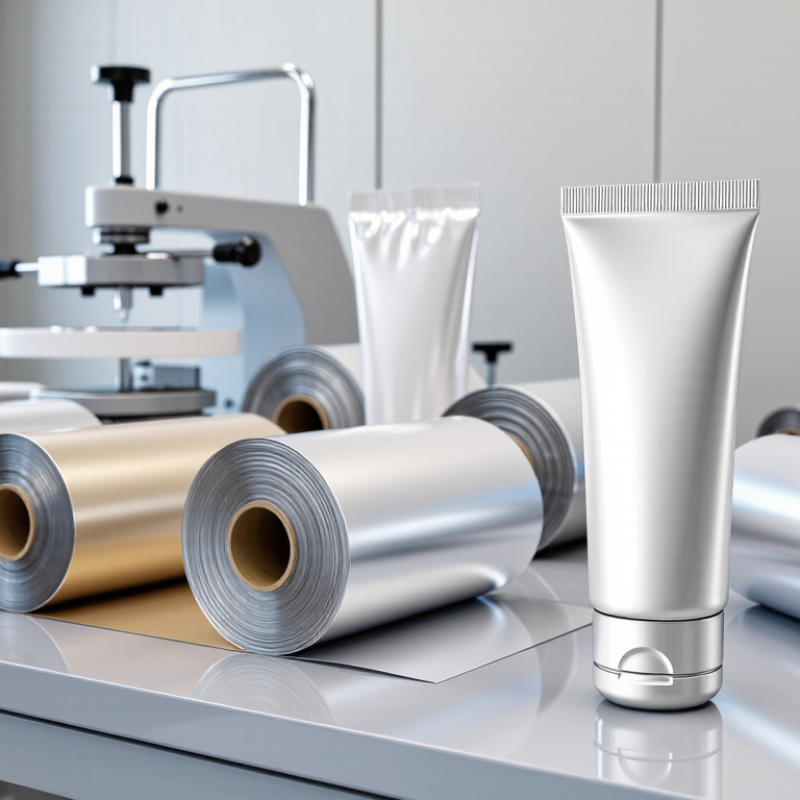
ABL, or aluminum barrier laminate, combines a thin aluminum layer with polymer films. The aluminum blocks light and helps limit oxygen and moisture transfer. Polymer layers protect the foil, add flexibility, and create a surface for printing or sealing. Think of a finished tube: printed artwork faces outward, while a product-contact layer faces inward. Between them, bonding layers hold the structure together. The exact layer order and thickness vary by application.
Each layer has a job. The outer film resists scuffs during handling. The aluminum layer provides a strong barrier, but it can crease or crack if the laminate is poorly designed or repeatedly flexed. Inner sealant layers must suit the product and the filling process. A mismatch may affect sealing or product quality. ABL is not one fixed recipe; compare barrier data, seal strength, flexibility, and compatibility before choosing a construction. Results can vary with processing conditions, so supplier specifications alone may not tell the whole story.
Tips: Ask for samples and test them on your actual filling line. Check seals after storage, not just on day one. Small print or forming trials can reveal issues early. That step is easy to overlook.
Common ABL Film Types and Their Material Structures
2026 Best ABL Laminate Film Types for Global Buyers
Common ABL Film Types and Their Material Structures
ABL laminate film pairs a thin aluminum layer with polymers to create a flexible barrier structure. The exact stack varies with the package, forming method, and required sealing performance. A common arrangement is polyethylene, tie layer, aluminum foil, tie layer, and an outer polymer or print layer. In this construction, aluminum limits light, oxygen, and moisture transmission, while polyethylene supports heat sealing. The tie layers help bond materials that would not reliably adhere on their own. Small differences matter.
Some films use PET as an outer layer for stiffness and print protection, with ink and adhesive layers above the foil. Others use a paper-based outer surface for a different feel and appearance. Layer order and thickness can vary, so a material name alone does not fully describe performance. Ask for the layer-by-layer construction and barrier data under stated test conditions.
For a practical comparison, check how the laminate behaves during forming and sealing, not only on a specification sheet. Look for even foil coverage, clean cut edges, and seals that remain consistent across the intended operating range. A sample may look excellent but still wrinkle or delaminate on a particular line. That part is easy to overlook. Testing with the actual product and equipment helps reveal these weak spots before a larger production run.
How ABL Film Types Compare in Barrier and Performance
2026 Best ABL Laminate Film Types for Global Buyers
How ABL Film Types Compare in Barrier and Performance
Aluminum-barrier laminate (ABL) relies on a thin foil layer to block light, oxygen, and moisture. Common structures pair foil with polyethylene and, sometimes, a polyester outer layer for stiffness and print quality. In converter technical data sheets, intact foil laminates often report oxygen transmission and water-vapor transmission below 0.1 units per square meter per day. These figures are useful benchmarks, not guarantees: seams, pinholes, and forming can weaken the finished pack. Test comparisons should specify ASTM D3985 for oxygen and ASTM F1249 for water vapor, plus temperature and humidity.
Polymer-barrier laminates use layers such as EVOH or polyamide instead of foil. They can flex more readily and avoid a metallic appearance, but their barrier performance depends strongly on resin grade, layer thickness, and humidity. EVOH’s oxygen barrier can fall as humidity rises, so a dry-film result may overstate performance in a damp bathroom. Check data at conditions close to actual storage. Small details matter.
Foil ABL usually suits products needing strong light and moisture protection; polymer-barrier structures can be a practical choice when flexibility or appearance matters more. Neither is automatically better. A 2023 review in Packaging Technology and Science highlights how multilayer-film barrier results vary with test conditions and structure. Yet lab data cannot fully predict a squeezed tube’s behavior. Compare filled-pack tests, seal strength, and repeated flexing—not just a flat-film figure.
How to Choose ABL Film for Products and Packaging Needs
2026 Best ABL Laminate Film Types for Global Buyers
Choosing ABL film starts with the product, not the artwork. Toothpaste, creams, and gels may need strong aroma, moisture, or light barriers, while a thick formula also needs a seal that resists pressure during filling. Aluminum thickness, polymer layers, and total laminate gauge affect protection, flexibility, and how cleanly the tube can be folded. Ask suppliers for barrier and seal-test results using your actual product. A lab sample can behave differently once it meets a warm, oily, or highly viscous formula.
The OECD’s 2022 Global Plastics Outlook estimates that packaging represented 40% of plastic waste generated worldwide in 2019. This is a useful reminder to avoid unnecessary material, but reducing gauge without testing can weaken performance. A thicker laminate may feel safer, yet it will not fix a poor seal. Small details matter.
Tips: Match the film to the filling temperature, product chemistry, and transport route. Check print adhesion and seal strength after aging tests. Request a clear layer specification, then run a production-line trial before approval. Results can be imperfect; record failures and adjust one variable at a time.
2026 Best ABL Laminate Film Types for Global Buyers
How to choose ABL film for product and packaging needs
The 1–5 scores are an indicative planning guide, not laboratory measurements or guaranteed film specifications. Aluminum barrier laminate (ABL) combines an aluminum barrier layer with polymer layers; confirm barrier performance, layer structure, sealability, and regulatory suitability with suppliers for each product.
Global Sourcing, Standards, and Sustainability Considerations
Global buyers should compare ABL laminate films by measured performance, not appearance alone. Request specifications for total thickness, aluminum-layer consistency, seal strength, barrier performance, and print adhesion. Small details matter. A tube that seals well on one production line may wrinkle or leak on another. Test samples using the intended filling equipment, product formula, and storage conditions.
Documentation needs to match the destination market and end use. Ask suppliers for current material declarations, test methods, batch traceability, and applicable compliance records. Requirements differ across regions and product categories, so a document suitable for cosmetic packaging may not establish suitability for food contact. Verify claims with qualified testing where needed. Pilot runs help reveal variation before a full shipment. Not always. A tidy sample can hide batch differences, and a spreadsheet may miss how film behaves after weeks in transit.
Sustainability decisions involve trade-offs. Aluminum layers can provide strong light and moisture barriers, but mixed-material structures may be difficult to recycle in some local systems. Ask whether the film is accepted by collection and sorting infrastructure in the markets where it will be sold. Compare thinner structures or recyclable alternatives only after checking barrier needs, shelf-life targets, and line compatibility. Request evidence behind recycled-content or recyclability claims; labels alone are not enough. Share forecast volumes and delivery windows early, since shipping routes, customs clearance, and minimum order quantities can change the real sourcing cost.