Leave Your Message

2026 Top Holographic Coated Aluminum Laminate Types

The 2026 market for Holographic Coated Aluminum Laminate is moving beyond visual novelty. Brands now expect stronger barrier performance, stable holographic effects, and dependable converting behavior. A reflective surface may attract attention, but it must also survive printing, folding, sealing, and transport. That balance shapes the laminate types reviewed in this guide.

Packaging materials specialist Chris Lefteri has said, “Material choices are never only visual; they shape how people understand a product.” This principle is especially relevant here. Embossed holographic films, vacuum-metallized aluminum layers, and protective topcoats can create different levels of brightness, depth, and scratch resistance. Their performance also changes under heat, humidity, adhesive stress, and repeated handling. Small differences matter. A sharp rainbow pattern can become dull after lamination if the coating chemistry is poorly matched.

This overview compares leading Holographic Coated Aluminum Laminate types expected to attract attention in 2026. It considers optical clarity, aluminum thickness, coating adhesion, recyclability, print compatibility, and production consistency. It also examines practical uses in premium packaging, labels, decorative panels, and security-oriented applications. Not every “high-shine” product is technically superior. Some coatings look impressive under showroom lighting but reveal pinholes, uneven gloss, or weak bond strength during testing. That is an uncomfortable point, yet it deserves attention. Buyers should request technical data, sample rolls, migration information, and independent performance tests before making a final decision.
2026 Top Holographic Coated Aluminum Laminate Types

Holographic Coated Aluminum Laminates: Definition and Core Structure

2026 Top Holographic Coated Aluminum Laminate Types

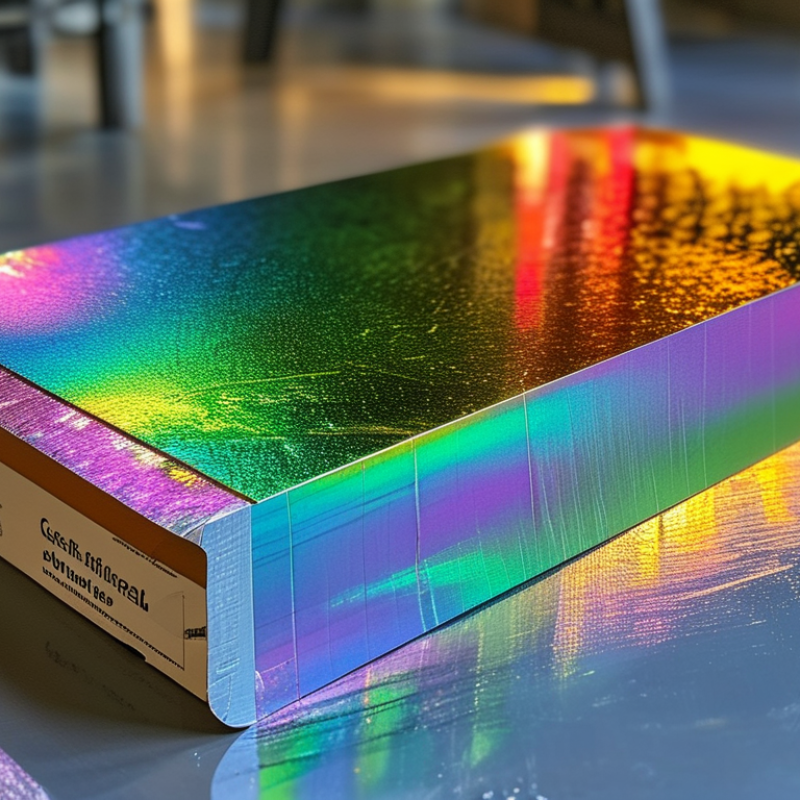
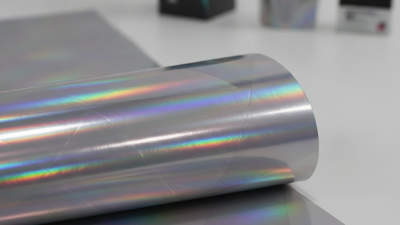
Holographic coated aluminum laminate is a multilayer material that combines metallic reflection with surface light diffraction. It is not a solid aluminum sheet. Its core structure usually includes a plastic film, a thin aluminum layer, a holographic pattern, and protective coatings.

The plastic film provides flexibility and dimensional stability during printing, cutting, and forming. The aluminum layer creates a bright, mirror-like background. A micro-embossed surface then bends light into changing colors or moving visual effects. The pattern may appear differently under direct, angled, or diffuse lighting.

That detail matters.

In practical production, the holographic effect depends on coating thickness, embossing pressure, surface cleanliness, and viewing angle. A poorly matched adhesive can cause bubbles, weak bonding, or visible distortion. Experienced converters also check curl, scratch resistance, and color consistency across the roll.

The outer coating protects the visual layer from moisture, abrasion, and handling marks. Some structures add another film for heat resistance or improved print adhesion. However, terminology varies between suppliers, so “holographic coated” does not always describe the same construction. Buyers should request a layer diagram, thickness data, and application test results.

The reflective layer is extremely thin.

This structure supports decorative packaging, labels, flexible panels, and security-oriented visual designs. Yet the laminate is not automatically durable in every environment. Heat, sharp folding, aggressive solvents, and repeated friction may reduce its appearance. Testing the finished product remains necessary, especially when the laminate will face transport, sunlight, or frequent handling.
2026 Top Holographic Coated Aluminum Laminate Types

Holographic coated aluminum laminates combine a holographic film or coating with an aluminum barrier layer and a sealant or bonding layer. The chart compares representative nominal layer thicknesses commonly used in flexible packaging constructions; actual specifications vary by application and converter.

PET-based structures generally provide high dimensional stability and printability, while BOPP-based structures offer low density and strong moisture resistance. Paper-based laminates add stiffness and a tactile appearance, and sealant-rich structures are selected when heat-sealing performance is a priority.

Main Types of Holographic Patterns and Visual Effects

2026 Top Holographic Coated Aluminum Laminate Types

Main Types of Holographic Patterns and Visual Effects

Holographic aluminum laminates now use more than simple rainbow shine. Microtext patterns create fine lines, waves, dots, or geometric grids. Kinetic effects appear when the viewing angle changes. Metallic silver, matte foil, and selective transparency produce different depth levels. Grand View Research’s 2024 Holographic Films Market report estimates the global market at roughly USD 11.5 billion in 2023, with growth near 7% annually through 2030. The figure supports wider use in premium flexible packaging.

Diffractive patterns remain the most recognizable type. They split light into vivid spectral colors, especially under retail lighting. Dot-matrix effects create moving images without heavy ink coverage. Embossed lens patterns can make text appear raised or floating. Subtle, not loud. A useful production detail is pattern registration. Misalignment can weaken the intended motion effect. Converters should inspect the laminate under three viewing angles, not only beneath factory lights.

Smithers’ 2024 outlook, The Future of Holographic Packaging to 2028, highlights visual differentiation and product protection as continuing demand factors. Yet appearance alone is not enough. Aluminum thickness, adhesive clarity, rub resistance, and seal performance can change the final effect. A common mistake is treating every rainbow finish as premium. In practice, a restrained wave or microtext design may communicate more clearly. The weak point is judgment. Designers still need to test glare, readability, and recycling compatibility before selecting a holographic pattern.

2026 Top Holographic Coated Aluminum Laminate Types - Main Types of Holographic Patterns and Visual Effects

Holographic Pattern Type Primary Visual Effect Viewing Behavior Typical Laminate Structure Common Applications Key Production Consideration
Rainbow Diffraction Multi-color spectrum with strong iridescence Colors shift as the viewing angle or light source changes Aluminum foil or metallized film, embossed holographic layer, protective coating, and adhesive layer Decorative packaging, labels, gift wraps, and promotional laminates Diffraction intensity depends on groove geometry, embossing quality, and illumination angle
Kinetic Motion Animated waves, flowing lines, or apparent movement Directional movement becomes visible when the laminate is tilted or viewed under moving light Metallic reflective layer combined with a directional micro-embossed pattern and clear topcoat Premium packaging, book covers, cards, and decorative panels Pattern orientation must remain consistent during web handling and slitting
Lenticular 3D Depth, layered imagery, or limited three-dimensional appearance Different image areas are revealed from different horizontal viewing positions Printed or metallized image layer with a lenticular lens sheet or lenticular surface structure Novelty packaging, point-of-sale graphics, collector cards, and signage Lens pitch, image interlacing, and registration must be precisely matched
Flip or Switch Image Two or more images appear to change as the angle shifts Image switching is most noticeable within a controlled viewing-angle range Micro-optical or lenticular structure laminated to a printed image layer and aluminum substrate Interactive packaging, event credentials, novelty products, and labels Artwork separation and viewing-angle calibration are essential for a clean transition
Dot Matrix Bright pixel-like sparkle, shimmer, or granular motion Small reflective dots create changing highlights under directional light Embossed micro-dot relief over a reflective aluminum or metallized layer Labels, flexible packaging, decorative films, and security-oriented graphics Dot size, spacing, and embossing depth control brightness and visual uniformity
Microtext and Guilloche Fine-line detail with an intricate, high-resolution appearance Text and line structures become more apparent when light reflects across the surface Precision-embossed microstructure over aluminum foil or a metallized carrier film Document laminates, labels, authentication features, and premium printed materials Resolution, line density, and coating clarity affect legibility and pattern definition
Geometric Prism Sharp flashes, angular highlights, and faceted reflections Reflection moves between geometric facets as the surface angle changes Prismatic embossed layer, reflective aluminum surface, and abrasion-resistant coating Luxury packaging, decorative laminates, display graphics, and interior accents Facet depth and embossing pressure must be controlled to prevent uneven highlights
Mirror and Liquid Metal High-gloss metallic reflection with a flowing or chrome-like appearance Produces strong specular highlights and a smooth reflective transition High-reflectivity aluminum layer with a smooth holographic or fluid microstructure Cosmetic packaging, premium cartons, decorative films, and product graphics Surface smoothness, coating transparency, and scratch resistance strongly influence appearance
Fresnel Lens Concentric rings, bright bands, and radial light concentration Brightness changes strongly with light direction and off-axis viewing Fine concentric embossed relief over a reflective aluminum or metallized film layer Decorative packaging, promotional graphics, labels, and specialty laminates Ring spacing and relief depth determine the sharpness and width of reflected bands
Transparent and See-Through Hologram Floating or translucent imagery while allowing the background to remain visible Holographic elements appear to hover above the printed or metallic background Partially transparent holographic coating, selective metallization, and clear protective film Window packaging, labels, overlays, decorative sheets, and layered graphics Transparency, adhesive clarity, and background color must be balanced for consistent contrast

Note: Actual optical performance depends on embossing geometry, reflective-layer uniformity, coating transparency, substrate flatness, illumination, and viewing angle.

Aluminum Foil Grades and Laminate Layer Configurations

Holographic coated aluminum laminates depend on two choices: foil grade and layer architecture. The foil is not merely a shiny carrier. It controls barrier performance, folding behavior, and seal reliability.

Common grades include 1235-O, 8011-H18, and 8079-O. Grade 1235-O offers high purity and good flexibility for thin structures. Grade 8011-H18 provides stronger handling performance and better resistance to web tension. Grade 8079-O is often selected when deep forming and reduced pinholing are important.

The European Aluminium Foil Association reports that packaging represents about 75% of aluminum foil demand in Europe. That figure explains the industry’s focus on lightweight, defect-controlled foil.

Layer design changes the final result. A typical structure uses PET, holographic lacquer, aluminum foil, adhesive, and polyethylene sealant. Another option places the holographic layer on oriented polypropylene before bonding it to foil. PET gives stiffness and print clarity, while polypropylene can improve flexibility and sealing efficiency. The International Aluminium Institute states that recycling aluminum can save approximately 95% of the energy required for primary production. Layer separation still remains difficult.

Smithers’ flexible packaging forecasts identify downgauging and recyclable structures as continuing development priorities. That pressure favors thinner 8011 or 8079 foil, but thinner is not always better. Pinholes may increase.

A practical trial should measure oxygen transmission, water vapor transmission, bond strength, and heat-seal strength. The choice matters. So does the coating’s abrasion resistance during converting. A weak assumption is treating holographic brightness as proof of laminate quality. It is only surface evidence.

Performance Differences Among Holographic Laminate Types

2026 Top Holographic Coated Aluminum Laminate Types

Performance Differences Among Holographic Laminate Types

Holographic aluminum laminates differ mainly in light control, barrier strength, and surface durability. Embossed laminates create bright rainbow effects through microscopic patterns pressed into the surface. Their visual depth is strong under direct lighting, but scratches can weaken the effect. Metallized laminates provide higher reflectivity and a more mirror-like appearance. They often support stronger oxygen and moisture barriers when properly sealed.

Clear holographic coatings preserve more of the aluminum surface or printed artwork beneath them. This option works well when designers need visible color with a subtle optical effect. However, coating thickness and curing quality can change clarity, gloss, and adhesion. Transfer-based structures may deliver sharper patterns with less material, though their performance depends heavily on bonding pressure and film compatibility.

In packaging trials, I would inspect the laminate after folding, rubbing, and heat exposure. A vivid sample can fail after repeated handling. Not ideal. Seal strength also varies with adhesive selection, foil thickness, and machine temperature. Embossed surfaces may show better texture, while metallized layers usually deliver more consistent reflectance. Still, neither type wins every test. A practical specification should measure haze, bond strength, pinholes, scuff resistance, and barrier performance under expected storage conditions. Small process changes matter. Library data helps, but production testing remains essential.

Key Selection Criteria for Holographic Aluminum Laminates

2026 Top Holographic Coated Aluminum Laminate Types

Key Selection Criteria for Holographic Aluminum Laminates

Holographic aluminum laminates differ in coating structure, barrier strength, and visual depth. Choose the type according to its end use, not appearance alone. A flexible pouch may need strong heat-seal performance, while a decorative panel may prioritize stiffness and gloss. Check aluminum thickness, coating uniformity, and surface adhesion before approval. These details affect folding, printing, and long-term durability.

Test real samples. Always.

A practical selection process should include rub resistance, seal strength, light exposure, and moisture testing. Ask for technical data, batch records, and migration information when the laminate contacts regulated packaging applications. Verify that the adhesive suits the film combination and production temperature. Poor compatibility can create bubbles, curling, or weak bonds. I have seen attractive holographic effects lose clarity after aggressive converting. The finish looked excellent at first.

Tips: Compare samples under daylight and warehouse lighting. Inspect the holographic pattern after bending, printing, and sealing. Request a small trial roll before placing a larger order. Do not judge quality from a single flat sheet. A minor coating flaw may become obvious after lamination. Also consider recyclability goals, local requirements, storage humidity, and delivery consistency. Supplier documentation matters, but factory trial results matter more.