Leave Your Message

7 Tips for Choosing PBL RPBL Laminate Film

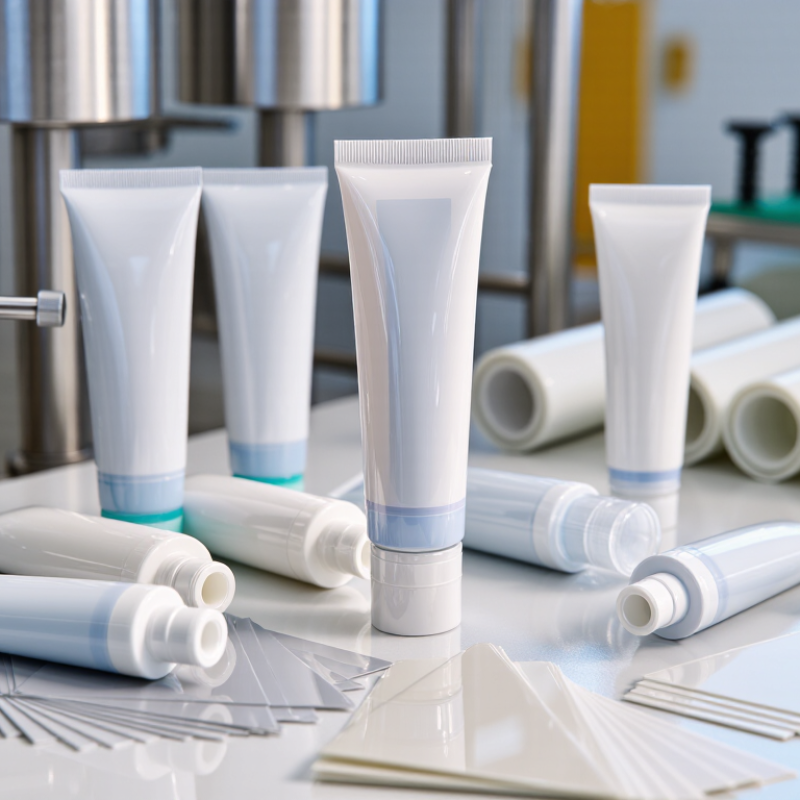
Choosing the right Pbl/Rpbl Laminate Film is not a matter of selecting the shiniest sample. The film must protect the product, run smoothly, and support responsible packaging goals. A toothpaste tube may look simple, yet its laminate controls oxygen resistance, moisture protection, seal strength, print quality, and squeeze recovery. Small material differences can become large production problems.

Packaging sustainability expert Robert Lilienfeld offers a useful principle: “Packaging should be judged by the total system, not by appearance alone.” That idea fits Pbl/Rpbl Laminate Film selection closely. A recycled layer may reduce virgin plastic use, but it can also affect stiffness, odor, barrier performance, or process stability. The decision needs evidence. Ask for barrier data, layer structure, thickness tolerances, migration documentation, and real filling-line results. Do not rely on a beautiful laboratory sheet.

The following seven tips examine the details that buyers sometimes overlook. They cover product compatibility, barrier requirements, sealing behavior, decoration quality, recycled content, supplier reliability, and testing methods. A film that performs well in a brochure may behave differently after hot filling, storage, or repeated squeezing. That is the uncomfortable part. There is no universal best structure. The correct choice depends on the formula, equipment, market, and end-of-life system. Even experienced teams can miss one factor. Careful comparison remains the safer path.
7 Tips for Choosing PBL RPBL Laminate Film

Define PBL and RPBL Structures Against 5- to 7-Layer Barrier Needs

PBL usually means plastic barrier laminate, built from polyethylene layers with a barrier core and adhesive tie layers. A five-layer structure may include PE, adhesive, EVOH, adhesive, and PE. It can protect sensitive contents while supporting heat sealing and controlled material use. A seven-layer design adds functional layers, such as extra PE, a bonding layer, or improved print protection. More layers do not automatically mean better performance.

RPBL generally refers to recycled plastic barrier laminate. Its recycled content may sit in the inner or outer PE layer, depending on appearance, contact requirements, and processing stability. The structure must be checked carefully. Recycled resin can vary in color, odor, stiffness, and moisture behavior. It varies.

For five- to seven-layer barrier needs, compare oxygen transmission, moisture transmission, seal strength, flex cracking, and chemical compatibility. Test the finished laminate, not only individual films. I have seen designs pass laboratory checks but weaken after repeated bending or filling-line heat. Measure twice. Confirm whether the barrier layer remains continuous after forming. Ask for recycled-content verification and migration documentation where applicable. A thinner five-layer PBL may be suitable for moderate protection and simpler conversion. A seven-layer RPBL can offer more controlled separation, but it may increase cost and processing complexity. The best choice depends on the actual shelf-life target, filling conditions, and recycling pathway. One detail is easy to miss: a strong barrier cannot compensate for a poor seal.

Set OTR Below 0.1 cc/m²/day and WVTR Below 0.1 g/m²/day

7 Tips for Choosing PBL RPBL Laminate Film

Set OTR Below 0.1 cc/m²/day and WVTR Below 0.1 g/m²/day

Tip 1: Define the barrier target before comparing film prices. For oxygen-sensitive products, an OTR below 0.1 cc/m²/day offers a demanding protection level.

Tip 2: Check WVTR under 0.1 g/m²/day when moisture can soften powders or damage tablets. These values are meaningful only with test conditions. ASTM D3985 commonly measures oxygen transmission near 23°C, while ASTM F1249 often uses 38°C and 90% relative humidity. A number without temperature, humidity, and thickness is incomplete.

Tip 3: Request laboratory reports, not marketing claims. Reports should identify specimen thickness, conditioning time, test area, and equipment calibration.

Tip 4: Inspect the laminate structure. A thin barrier layer may perform well initially, yet folding, pinholes, or poor adhesion can raise transmission sharply.

Tip 5: Test finished pouches or sachets, including seals. Packaging research repeatedly shows that closures and converting defects can dominate real-world leakage. The World Packaging Organisation’s sustainability reports also stress performance across the entire package system, not film alone.

Tip 6: Compare results after aging. Heat, humidity, and flexing can change polymer behavior.

Tip 7: Confirm the film suits forming, printing, sealing, and recycling requirements. Do not chase the lowest laboratory value blindly. One overlooked seal can erase excellent barrier performance. I would also repeat testing with production samples, because pilot films rarely behave perfectly on fast equipment. A useful specification should include acceptance limits, test methods, and retest rules.

Compare Seal Strength Using ASTM F88 and Heat-Seal Window Data

7 Tips for Choosing PBL RPBL Laminate Film

When choosing PBL or RPBL laminate film, seal strength needs measurable evidence. ASTM F88 provides a practical method for testing sealed strips. The test records the force required to peel a seal apart. Use consistent strip width, peel speed, and conditioning time. Test several samples from each production lot. One result can mislead.

Heat-seal window data adds important context. It shows how temperature, dwell time, and pressure affect sealing. A film may reach high strength at one temperature, yet fail across a narrow range. Map the window with a small temperature grid. Record the lowest temperature that creates a continuous seal. Also record the point where film distortion or leakage begins. Watch the spread between samples.

Compare ASTM F88 results at several points inside that window. Look for stable strength, clean peel behavior, and limited variation. A strong seal with film tearing may be useful, but it can complicate opening performance. A weak, adhesive-only peel may indicate poor process tolerance. In my testing experience, pressure control is often overlooked. It should not be. Calibrated equipment, traceable settings, and clear sample labels improve confidence. Still, laboratory results cannot perfectly copy every filling line. That limitation deserves attention. Temperature drift, contamination, and uneven jaws can change the outcome. Avaliable data should guide trials, not replace them.

Check Film Thickness, COF 0.2–0.4, and High-Speed Machineability

7 Tips for Choosing PBL RPBL Laminate Film

Check Film Thickness, COF 0.2–0.4, and High-Speed Machineability

Film thickness is the first practical checkpoint for PBL and RPBL laminate selection. A thinner structure can reduce material use, but it may lose stiffness, seal strength, or puncture resistance. Review the complete tolerance, not only the nominal gauge. ASTM D374 and ISO 4593 provide recognized methods for measuring thickness. Small variations can create wrinkles during unwinding. They can also affect filling accuracy.

COF deserves equal attention. For high-speed packaging, a coefficient of friction around 0.2–0.4 is a useful working range. Lower values may cause slipping, while higher values can increase drag and film tracking problems. Test both static and kinetic COF under the actual temperature and humidity conditions. ASTM D1894 and ISO 8295 define common test procedures. Test data should include the film surface, not just the finished roll.

Machineability is where laboratory promises meet production reality. Smithers’ flexible-packaging market assessments repeatedly identify downgauging and recyclable structures as major industry trends. However, lighter films often demand tighter tension control. Run a short trial at production speed. Check web flutter, seal-window stability, splice behavior, and roll telescoping. A film that performs perfectly at low speed may fail after several hours. That assumption is convenient, but incomplete. Resin changes, ink coverage, and storage humidity can shift COF and sealing performance. Record these variables before approving the structure.

Verify PCR Content, Recyclability Claims, and FDA or EU Compliance

Choosing PBL or RPBL laminate film requires more than checking a recycled-content percentage. PCR material must have traceable input records, supplier declarations, production-batch data, and chain-of-custody evidence. The OECD’s Global Plastics Outlook reports that only 9% of plastic waste was recycled globally in 2019. Therefore, vague “eco” claims deserve careful questioning. Ask whether the PCR percentage is measured by mass, verified by an independent auditor, and maintained after adhesive and barrier layers are added.

Recyclability claims need a destination. A laminate may pass a laboratory test but fail in a local sorting or reprocessing system. Review recognized design guidance, approved collection routes, and actual end-market acceptance. The 2023 Global Commitment Progress Report also shows that packaging recyclability remains difficult across markets, especially for flexible structures. Request test conditions, not only a certificate. Film thickness matters. So do inks, sealants, and tie layers.

Food-contact use requires separate scrutiny. In the United States, recycled plastic processes may need an FDA “no objection” letter or other applicable clearance evidence. In Europe, recycled plastic for food contact is governed by Regulation (EU) 2022/1616, alongside general food-contact rules. Check migration testing for the complete laminate, not just the PCR resin. A certificate can still leave a blind spot. Claims should identify the jurisdiction, intended use, and percentage basis. That wording is less attractive, but more defensible.