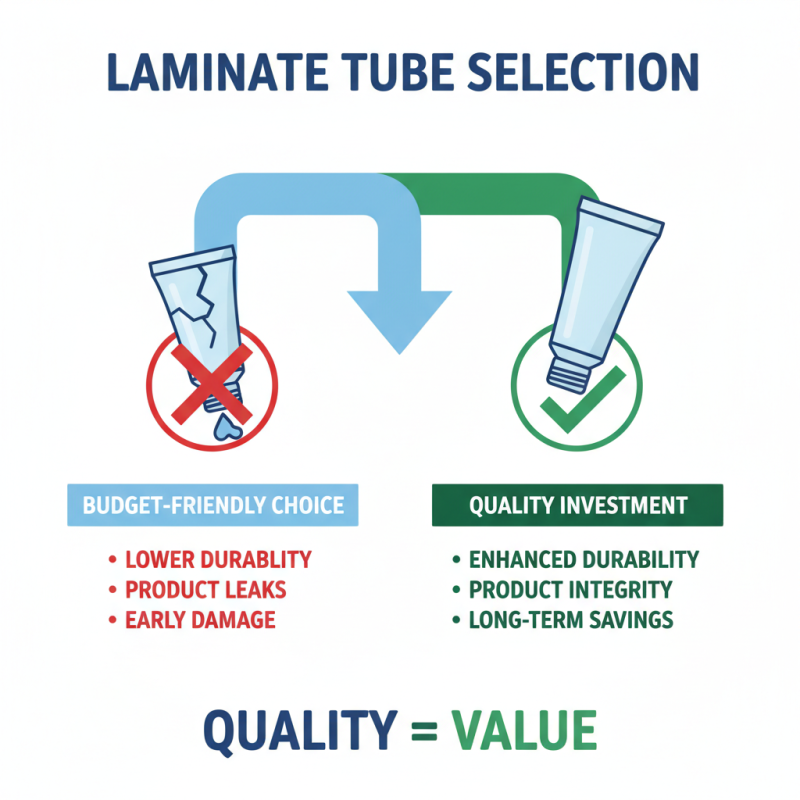
Essential Tips for Choosing the Right Laminate Tube?
Choosing the right laminate tube can be a daunting task. With so many options available, it’s important to make informed decisions. Steve Williams, a packaging expert, once said, "The right laminate tube can enhance product appeal significantly." This highlights the need for careful consideration.
When assessing laminate tubes, think about your product's requirements. Different materials offer various benefits. For example, some are better for protecting contents from light and air. Choose wisely based on your specific needs.
It’s also essential to consider aesthetics. A visually appealing tube can capture consumer attention. However, functionality should not be sacrificed for looks. Finding balance is key. Explore options, but remember: not all choices will fit your product perfectly. Reflect on what matters most.
Understanding the Importance of Material Selection for Laminate Tubes
When selecting laminate tubes, the material choice plays a crucial role in their functionality. Different materials offer various benefits, impacting durability, barrier properties, and aesthetic appeal. Polyethylene is common for its flexibility and moisture resistance. Alternatively, polypropylene provides a more rigid structure. Each option has distinct characteristics worth considering.
A good understanding of these materials helps in making informed decisions. For instance, a clearer tube might enhance product visibility. It also allows consumers to see what they are buying. However, this choice can sometimes compromise strength. Reflecting on these trade-offs is essential. You may need to balance visibility with protection depending on the product inside.
Comfort with selections often comes through experience. In some cases, inadequate research leads to poor choices. Many overlook critical factors like temperature sensitivity or chemical compatibility. These oversights can result in product failure. A thoughtful approach to material selection ensures that laminate tubes meet both functional and aesthetic needs, setting the foundation for success.
Key Factors in Assessing Laminate Tube Thickness and Durability
When selecting a laminate tube, thickness and durability are critical factors. A thicker tube often provides more protection for the contents inside. However, this can mean added weight and cost. Consider what you need to protect. Delicate products may require more robust protection. A tube that's too thin may not withstand transport.
Durability comes from the materials used. Different laminate compositions can influence how well a tube resists punctures and tears. Conduct a simple test. Squeeze different samples to feel their resilience. Some may feel flimsy, while others are surprisingly strong. A balance is vital. A perfectly durable tube might not always equate to the best choice for specific products.
Environmental conditions must also be considered. Humidity and temperature changes can affect tube performance. Will your product face varying climates? This factor may require a rethink of your initial choices. It's best to revisit your needs regularly. Ask questions, reassess, and stay informed about new materials in the market. The perfect laminate tube should evolve with your product requirements.
Essential Tips for Choosing the Right Laminate Tube
Evaluating Barrier Properties of Laminate Tubes for Product Integrity
When selecting laminate tubes, evaluating their barrier properties is crucial. These tubes often contain sensitive products like cosmetics and pharmaceuticals. According to a report by Smithers Pira, 60% of product failures in these sectors relate to inadequate packaging. This highlights the importance of reliable barrier technologies.
Different materials offer varying levels of protection against oxygen, moisture, and UV light. For instance, a multilayer structure can significantly enhance barrier integrity. It’s essential to analyze each layer's composition and performance. Yet, many manufacturers overlook the specific needs of their products. A one-size-fits-all approach can lead to compromised integrity and spoilage.
Furthermore, the testing methods for barrier properties should not be underestimated. Standard tests like permeability measurement provide insight but may not capture real-world conditions. Different temperatures and humidity levels can affect the tubes' performance. Be cautious of relying solely on lab results. Industrial applications may reveal weaknesses not seen in controlled environments. Regular evaluations and adjustments are necessary to maintain product quality.
Essential Tips for Choosing the Right Laminate Tube
| Property |
Best Range |
Impact on Product Integrity |
| Oxygen Barrier |
< 1 cc/m²/24h |
Prevents oxidation and prolongs shelf life |
| Moisture Barrier |
< 0.1 g/m²/24h |
Maintains product consistency and prevents spoilage |
| Light Barrier |
Opaque or UV-filtering |
Protects sensitive ingredients from degradation |
| Chemical Resistance |
High resistance |
Ensures integrity of contents against reactive substances |
| Puncture Resistance |
Strong and durable |
Reduces risk of leaks or contamination |