Leave Your Message

How to Choose Holographic Coated Aluminum Laminate in 2026?

Choosing Holographic Coated Aluminum Laminate in 2026 requires more than comparing shine, color, and price. The material must perform on real production lines, under real storage conditions. Smithers’ The Future of Flexible Packaging to 2028 identifies sustainability, downgauging, barrier performance, and recyclable structures as major packaging priorities. Grand View Research also reports continuing growth in holographic film applications, driven by premium branding, security features, and visual differentiation.

That growth creates a practical warning. A bright sample may still curl, crack, or lose adhesion after heat sealing. Ask for oxygen transmission, water vapor transmission, bond strength, seal-temperature, and migration data. Request accelerated aging tests, not only showroom samples. Check whether the aluminum layer remains uniform after embossing. Small defects become obvious under retail lighting.

Packaging materials consultant Dr. Laura P. Sullivan states, “A laminate earns trust when its visual effect survives handling, sealing, and storage.” That principle should guide supplier evaluation. Review technical datasheets, batch consistency, compliance declarations, and traceability records. Confirm whether the coating suits gravure, flexographic, or digital printing. Also examine end-of-life claims carefully. “Recyclable” can depend on local collection systems and laminate separation.

The strongest option balances appearance, barrier protection, machinability, regulatory safety, and verified environmental performance. It may not be the cheapest roll. It may not be the brightest sample. That is the uncomfortable part. In 2026, buyers should treat Holographic Coated Aluminum Laminate as an engineered packaging system, not merely a decorative surface.
How to Choose Holographic Coated Aluminum Laminate in 2026?

What Is Holographic Coated Aluminum Laminate?

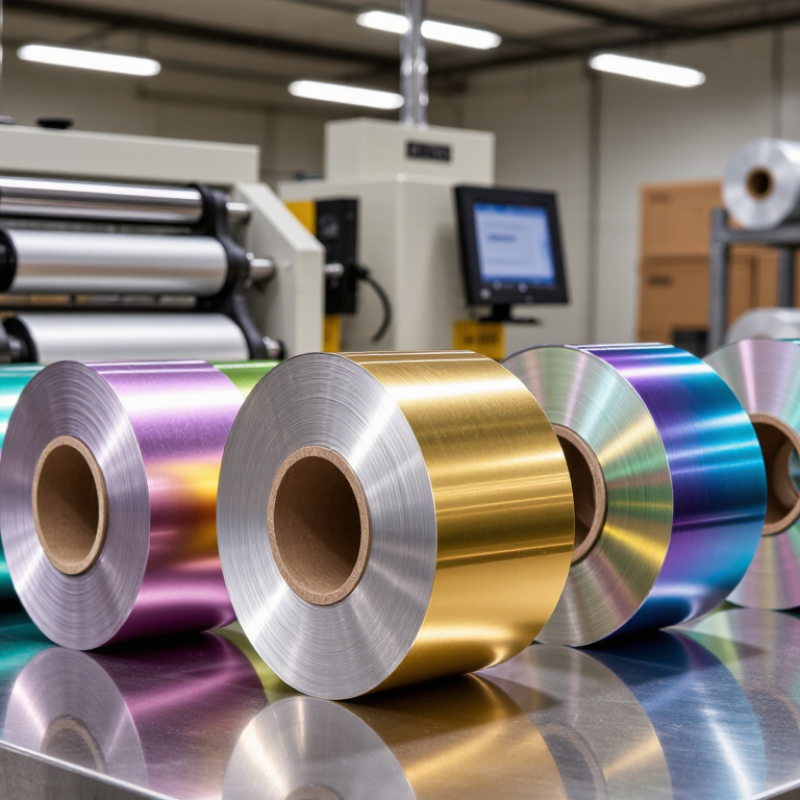
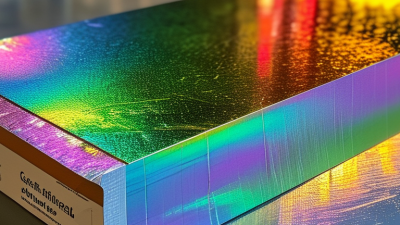
Holographic coated aluminum laminate is a layered material made from aluminum foil, a holographic coating, adhesive, and a protective surface film. The holographic layer creates shifting colors when light moves across the surface. It may look like glass, but it is much lighter and more flexible. In packaging, labels, decorative panels, and printed displays, this effect adds depth without using raised parts.

The aluminum core provides a bright reflective base and useful barrier performance against light, moisture, and oxygen. However, the final result depends on coating thickness, adhesive quality, surface treatment, and printing conditions. A material can look impressive in a sample but fail during folding or heat sealing. I have found that small scratches become highly visible under strong retail lighting. That detail is easy to underestimate.

Tips: Ask for technical data, not only photos. Check gloss, coating adhesion, fold resistance, and color consistency. Test the laminate with your actual ink and forming process. Also, confirm whether the structure suits your recycling goals. Mixed layers can complicate recycling, even when aluminum is present. For 2026 projects, choose a finish that matches the product’s handling conditions, not just its visual appeal. A softer holographic effect may perform better than an intense pattern on curved surfaces. This choice is less exciting, perhaps, but often more reliable.
How Is Holographic Coated Aluminum Laminate Manufactured?

How Is Holographic Coated Aluminum Laminate Manufactured?

Manufacturing begins with clean aluminum foil, usually selected for stable thickness and smooth surface quality. Technicians remove dust, oil, and moisture before applying a primer or functional coating. A controlled coating line spreads the liquid layer evenly across the foil. Drying temperature and web tension must remain steady. Small changes matter.

The holographic pattern is formed through precision embossing. A patterned roller presses microscopic lines, dots, or geometric structures into the coated surface. Light then bends across these structures, creating the shifting visual effect.

Another coating may protect the pattern from scuffing and oxidation. The treated foil is laminated to paper, plastic film, or another substrate with a measured adhesive layer. Pressure, heat, and curing time affect bond strength.

Choosing the right laminate requires more than checking appearance. Ask for thickness data, coating specifications, roll width, and batch inspection records. Experienced suppliers should provide adhesion, gloss, haze, and surface-resistance results. Inspect the edge of a sample roll for wrinkles, uneven coating, or telescoping. These defects can appear later during printing or converting. No process is flawless. A slight color shift may still occur between batches, especially under different lighting. It deserves investigation, not a quick rejection. Small trial runs help confirm how the laminate behaves on your actual equipment.

Which Performance Factors Should Buyers Evaluate?

How to Choose Holographic Coated Aluminum Laminate in 2026?

Which Performance Factors Should Buyers Evaluate?

A holographic effect attracts attention, but appearance is only the starting point. Buyers should examine coating adhesion, surface hardness, and resistance to scuffing. Rub testing can reveal whether the pattern fades after repeated handling. A beautiful sample may fail quickly.

Check optical consistency across the full roll. Look for uneven colors, broken diffraction, pinholes, or cloudy areas under direct light. Ask for measured gloss, haze, and reflectivity data. Small variations can become obvious on large panels or continuous packaging surfaces. Request production samples, not only showroom pieces.

Thermal performance also matters. Confirm the laminate’s forming temperature, dimensional stability, and resistance to curling. If heat sealing is required, test the complete structure rather than the film alone. Moisture, oils, cleaning agents, and outdoor exposure may change adhesion over time. Use accelerated aging tests when the application demands long service.

Barrier performance deserves careful attention. Evaluate oxygen and moisture transmission after bending, printing, or sealing. The coating should remain intact around edges and folded areas. Ask for batch records, test methods, and acceptable tolerances. Reliable suppliers should explain differences clearly, even when results are imperfect.

A practical mistake is choosing the brightest finish without checking conversion equipment. Excessive surface friction can slow feeding or create scratches. Another concern is recyclability, because mixed layers may complicate recovery. Review the laminate structure early. Performance, process compatibility, and documented testing should carry more weight than visual impact alone.

This buyer scorecard uses an illustrative 100-point weighting model for holographic coated aluminum laminate procurement in 2026. Buyers should verify each value through supplier technical data sheets and laboratory testing, including coating adhesion, barrier performance, heat-seal behavior, abrasion resistance, and regulatory compliance.

How Do Applications Determine the Right Laminate Specifications?

Choosing holographic coated aluminum laminate in 2026 should begin with the application, not appearance. A reflective finish may look impressive, yet it can perform poorly in demanding conditions. Flexible pouches need thin laminate, strong seals, and reliable folding resistance. Decorative panels require greater stiffness, scratch resistance, and stable color under indoor lighting. Label stock may need smooth printing, clean die-cutting, and consistent release from adhesive layers.

Temperature and moisture change the specification. Cold-chain packaging needs a dependable barrier against vapor and oxygen. Heat-sealed structures require coatings that tolerate the selected sealing range without distortion. Outdoor displays may need stronger protection against ultraviolet exposure and surface abrasion. Ask for measured data on thickness, coating weight, haze, adhesion, and barrier performance. Do not rely on visual samples alone.

Processing equipment matters too. A laminate that runs smoothly on one line may wrinkle on another. Check web tension, winding quality, core size, and compatibility with inks or adhesives. Small pilot trials are essential. They reveal curling, weak seals, pinholes, or holographic loss before full production. A perfect specification on paper can still disappoint. That is worth admitting. Review the result after storage, handling, and repeated bending, not just immediately after production. Teams should also confirm traceability, test methods, and applicable safety requirements before approving the final structure.

How to Choose Holographic Coated Aluminum Laminate in 2026? - How Do Applications Determine the Right Laminate Specifications?
Application Typical Laminate Structure Recommended Total Thickness Aluminum Layer Holographic Surface Requirement Key Barrier Requirement Recommended Sealant or Adhesive Layer Important Selection Criteria
Flexible Food Pouches Printed PET / adhesive / aluminum foil / sealant film 70–120 μm 7–12 μm foil High glossFine-line patternFood-contact compliant coating Very high resistance to oxygen, moisture, light and aroma transfer PE, CPP or compatible heat-sealable film; adhesive selected for retort or non-retort conditions Heat-seal temperature, puncture resistance, coefficient of friction, print adhesion and migration compliance
Confectionery and Chocolate Wrap Holographic coated foil / primer or print layer / heat-sealable coating 20–45 μm 8–12 μm foil Reflective rainbow effectHigh surface uniformity Strong light and moisture protection; moderate oxygen protection Heat-sealable lacquer or compatible wax/adhesive system Dead-fold performance, smooth forming, low odor, scuff resistance and suitability for high-speed wrapping
Pharmaceutical Blister Lidding Print varnish / aluminum foil / heat-seal coating 20–30 μm 20–25 μm foil Controlled holographic registrationTamper-evident effect High protection from moisture, oxygen and light Heat-seal coating matched to PVC, PET or polypropylene blister webs Pin-hole control, seal integrity, clean peel or push-through behavior, low extractables and traceable surface treatment
Security Labels and Authentication Seals Holographic PET / adhesive / aluminum layer or metallized barrier film / release liner 25–80 μm 0.02–12 μm, depending on whether metallized film or foil is used Kinetic imageMicrotextDiffractive features Optical consistency and resistance to delamination are more important than maximum gas barrier Permanent pressure-sensitive adhesive or destructible adhesive system Image registration, tamper evidence, scratch resistance, UV stability, die-cutting performance and residue control
Cosmetic and Premium Personal-Care Packaging Printed PET / adhesive / aluminum foil or metallized film / PE or CPP 60–110 μm 7–12 μm foil, or a thinner metallized layer for decorative use Premium glossLarge-area patternColor-shifting effect High light barrier and good resistance to oils, fragrances and moisture PE, CPP or cosmetic-compatible sealant film Chemical resistance, attractive shelf appearance, odor neutrality, pouch stiffness and resistance to flex cracking
Coffee and Aroma-Sensitive Products Printed PET / adhesive / aluminum foil / PE or CPP 90–140 μm 9–12 μm foil Abrasion-resistant coatingModerate to high visual impact Very high oxygen, moisture, aroma and light barrier High-performance PE, CPP or sealant designed for strong hermetic seals Low oxygen transmission, low moisture transmission, flex-crack resistance, seal contamination tolerance and valve compatibility
Thermal Insulation and Reflective Building Films Holographic or reflective polymer film / adhesive / aluminum foil or reflective coating / backing film 50–200 μm 7–50 μm foil, depending on mechanical and reflective requirements High reflectanceWide-area uniformity Continuous reflective surface; gas barrier is generally secondary Construction-grade adhesive or laminated backing system Solar reflectance, emissivity, tear strength, dimensional stability, flame performance and resistance to temperature cycling
Decorative Panels and Interior Surfaces Protective clear film / holographic decorative layer / aluminum-coated film or foil / rigid substrate 100–500 μm, excluding the rigid substrate Usually 0.02–12 μm decorative metallization; thicker foil for special forming requirements Deep visual effectUniform repeatProtective topcoat Barrier performance is normally less critical than appearance and durability Structural adhesive or heat-lamination layer compatible with the substrate Surface hardness, stain resistance, cleanability, UV exposure, forming radius, dimensional stability and scratch resistance

Typical industry guidance: actual specifications should be confirmed through end-use testing, including seal strength, oxygen and moisture transmission, pin-hole inspection, flex-crack testing, chemical compatibility, optical uniformity and applicable food, pharmaceutical or construction regulations.

How Can Buyers Compare Suppliers and Verify Product Quality?

How to Choose Holographic Coated Aluminum Laminate in 2026?

Buyers should compare suppliers through measurable details, not attractive sample photos. Request the aluminum thickness, laminate structure, coating type, adhesive specification, and available roll widths. Ask for recent production samples from the same batch. A showroom sample may hide unstable color or weak bonding. It happens.

Check whether the supplier provides test records for gloss, abrasion resistance, tape adhesion, heat exposure, and humidity aging. Ask how holographic patterns remain aligned during slitting and forming. Reliable suppliers explain their inspection points clearly. They should also state tolerances, minimum order quantities, lead times, and replacement procedures. Contact two or three existing customers if possible. Their experience may reveal delays that documents do not show.

Tips: Cut a small sample and inspect it under direct light. Look for pinholes, cloudy areas, scratches, edge lifting, and uneven color. Bend it around a suitable radius, then test adhesion with standard tape. Measure several points across the roll, not only the center. Keep photos and results beside the supplier’s specification sheet. Do not accept vague claims such as “premium quality.” Ask for dated reports, test conditions, and batch numbers. A small mistake in coating thickness can become visible across thousands of finished panels. Conversely, excessive testing can slow a practical purchase. Balance evidence with the actual application.