7 Tips for Buying Holographic Coated Aluminum Laminate
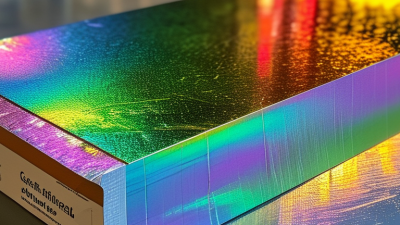
Buying Holographic Coated Aluminum Laminate can look simple until the first sample arrives. The surface may sparkle beautifully, yet performance depends on more than visual appeal. Buyers should examine aluminum thickness, coating adhesion, holographic clarity, surface uniformity, and compatibility with printing or forming processes. A bright showroom sample does not guarantee stable production results.
Details matter.
This guide presents seven practical tips for evaluating suppliers and materials with greater confidence. It considers certificate records, laboratory testing, sample approval, minimum order quantities, lead times, storage conditions, and packaging protection. Experienced purchasers often request technical data sheets and inspect samples under different lighting angles. That habit can reveal pinholes, uneven reflections, weak bonding, or color shifts that photographs hide.
Supplier experience also deserves careful review. Ask how the laminate performs during cutting, laminating, folding, and transport. Request clear information about tolerances and recommended handling temperatures. Independent testing may be worthwhile for demanding applications. However, test results still need context, because one successful batch does not prove long-term consistency.
Some choices are easy to underestimate.
This article also acknowledges the less comfortable part of purchasing: specifications can remain incomplete, and supplier claims may require verification. A careful buying process leaves room for questions, comparison, and revision. By combining physical inspection with documented quality controls, businesses can reduce avoidable waste and select Holographic Coated Aluminum Laminate that suits both appearance and practical production needs.
Define the End Use and Select Typical 12–20 µm Laminate Structures
Define the End Use and Select Typical 12–20 µm Laminate Structures
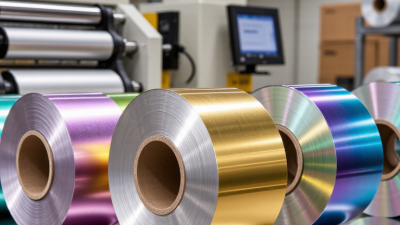
A holographic laminate should be specified around its final use, not its visual effect. Snack packs need heat sealing, puncture resistance, and stable graphics. Decorative overwraps may prioritize brilliance and fold performance. For many applications, 12 µm holographic PET provides a practical outer layer, while 15–20 µm PET offers greater stiffness and handling tolerance. A common structure is 12 µm holographic PET, adhesive, and 40–70 µm PE sealant film. Foil-based designs may use 7–12 µm aluminum foil beneath the printed or holographic layer.
Tip: Define the package first.
The choice changes with filling temperature, moisture exposure, and converting speed. A high-gloss holographic surface can expose wrinkles, adhesive streaks, or poor tension control. I have seen attractive laboratory samples fail during slitting because the coating scratched easily. That mistake is expensive. Request migration, bond-strength, seal-strength, and coefficient-of-friction data for the intended structure. ASTM test methods can support comparison, but real production trials remain essential.
Tip: Test the complete laminate.
The International Aluminium Institute reports that aluminum recycling can use about 95% less energy than primary production. That figure supports efficient material planning, but it does not replace end-of-life evaluation. The Flexible Packaging Association’s industry reports also show the scale of flexible packaging demand in the United States, reinforcing the need for consistent machinability and downgauging. Still, thinner is not always better. A 12 µm structure may reduce material use, yet a 20 µm option can prevent tearing and rejected rolls. My own selection would remain provisional until sealing, aging, and transport tests are complete.
Compare Barrier Data Using ASTM D3985 and ASTM F1249 Test Methods
Buying holographic coated aluminum laminate requires more than admiring its reflective finish. Barrier performance should guide the decision. ASTM D3985 measures oxygen transmission rate using a coulometric sensor, while ASTM F1249 measures water vapor transmission rate with a modulated infrared sensor. These values are not interchangeable.
Tip 1: Request OTR data from ASTM D3985. Check the test temperature, humidity, thickness, and reporting units. Tip 2: Request WVTR data from ASTM F1249 under controlled relative humidity. A low value matters only when conditions match your application. Tip 3: Compare identical laminate structures. Different aluminum thicknesses can make comparisons misleading. Small details matter.
Tip 4: Ask whether samples were conditioned before testing. Tip 5: Examine barrier performance after flexing, folding, or heat sealing. Pinholes may appear after handling. Tip 6: Review seal strength separately, because excellent film data cannot repair a weak seal. Tip 7: Ask for recent laboratory reports and test repeatability. One impressive result is not enough. I once focused too heavily on the lowest oxygen value and overlooked moisture exposure. That was a useful correction. ASTM results describe controlled specimens, not every finished package. Consider pilot testing with actual artwork, forming pressure, and storage conditions before purchasing large quantities.
Check Bond Strength, Heat Sealing, and ISO 527 Mechanical Performance
7 Tips for Buying Holographic Coated Aluminum Laminate
When buying holographic coated aluminum laminate, inspect the bond before admiring the shine. Request peel-strength results for every production lot. ASTM F88/F88M measures seal strength using controlled specimen width, temperature, pressure, and dwell time. Your supplier should state these conditions clearly. A result without test settings is incomplete evidence. Check adhesive coverage, coating uniformity, and tunnel-free edges under strong light. Small wrinkles often become larger after forming.
Heat sealing deserves practical testing. Ask for a seal window, not one attractive laboratory value. Test the lowest and highest sealing temperatures, then repeat after conditioning at high humidity. Record seal strength, visual distortion, and leakage. ISO 527-3:2018 provides a recognized method for tensile testing of plastic films, including tensile strength, elongation, and modulus. Compare machine and transverse directions separately. A laminate may pass tensile testing while failing at the seal.
For mechanical acceptance, request ISO 527 data at the planned thickness and humidity. Do not compare a 60-micron sample with a 100-micron structure. Industry test reports commonly show that thickness, adhesive curing, and coating defects affect performance more than appearance. A supplier’s average value is useful, but the minimum value matters more. Ask for five specimens or more. Seven checks sound manageable, yet real production varies. That uncomfortable variation should shape your purchasing specification.
7 Tips for Buying Holographic Coated Aluminum Laminate: Key Technical Checks
Use the chart as a preliminary buying screen. Compare bond strength, heat-seal strength, and ISO 527 tensile performance before approving production samples. Actual acceptance limits should be agreed with the converter and verified by laboratory testing.
How to read it: The three levels represent practical screening points rather than supplier claims. Bond and heat-seal strength are shown in N/15 mm, while tensile strength is shown in MPa. Request test reports that identify the test method, specimen direction, conditioning, seal temperature, dwell time, and pressure.
Reference framework: ISO 527 for tensile properties of plastics and commonly used flexible-packaging seal and laminate-bond test practices. Values are representative technical targets and must be validated for the specific laminate construction.
Confirm Printability, Recyclability, MOQ, and 7-Tip Supplier Documentation
When buying holographic coated aluminum laminate, confirm printability before discussing appearance. Ask for a physical sample, not only digital images. Check ink adhesion, color accuracy, registration, drying time, and rub resistance. A short press trial can reveal pinholes or coating failure. Small details matter.
Supplier documentation should answer seven practical questions. Request the technical data sheet, coating thickness record, print-test report, and recyclability statement. Also request the minimum order quantity, acceptable dimensional tolerances, and batch traceability record. These documents should match the delivered material, including alloy, gauge, finish, and roll width. Missing numbers create avoidable production risk.
Recyclability needs careful wording. Aluminum may be recyclable, but coatings, inks, and adhesives can affect local processing. Ask whether the laminate has been assessed as a complete structure. Request written guidance for collection and separation. MOQ should include trial quantities and repeat-order conditions. A low MOQ may still hide setup charges or unused stock. The glossy sample looked excellent, yet print performance changed after storage. That is a useful warning. Keep samples for comparison, and record temperature, humidity, and testing dates. Supplier paperwork is not decoration; it is evidence for purchasing decisions.